
TL;DR: Most residential trauma scene cleanups take between one and three days. A single-room scene with limited contamination can often be completed in four to eight hours. Larger areas, structural material removal, or extensive odor treatment extend the timeline. A professional crew handles all biohazard removal, disinfection, and odor neutralization, families do not need to be present and are never asked to assist.
If you’re trying to figure out what happens next after a traumatic loss in your home, one of the first practical questions is how long the cleanup will take and what that process actually looks like. The answer depends on the size of the affected area, the materials involved, and whether structural components like drywall or subfloor need to come out. This guide walks through the process honestly, without clinical detail, so you know what to expect.
How long does trauma scene cleanup typically take?
Most residential trauma scene cleanups are completed within one to three days. A contained single-room scene, hardwood or tile flooring, minimal wall involvement, can often be finished in a single visit of four to eight hours. When contamination has reached porous materials like carpet padding, drywall, or subfloor, those materials must be removed and disposed of as regulated biohazard waste, which adds time. Odor treatment, which often requires a second visit after initial cleaning, can extend the overall timeline by one additional day.
The crew’s goal is to move efficiently and discreetly. Most families choose not to be present during the work, which is completely normal. The team will communicate with you before and after, and can coordinate access through a property manager, attorney, or other representative if that’s easier.
What does the trauma scene cleanup process actually involve?
A certified trauma scene cleanup follows a structured protocol that protects both the crew and anyone who will occupy the space afterward. The process has four main phases.
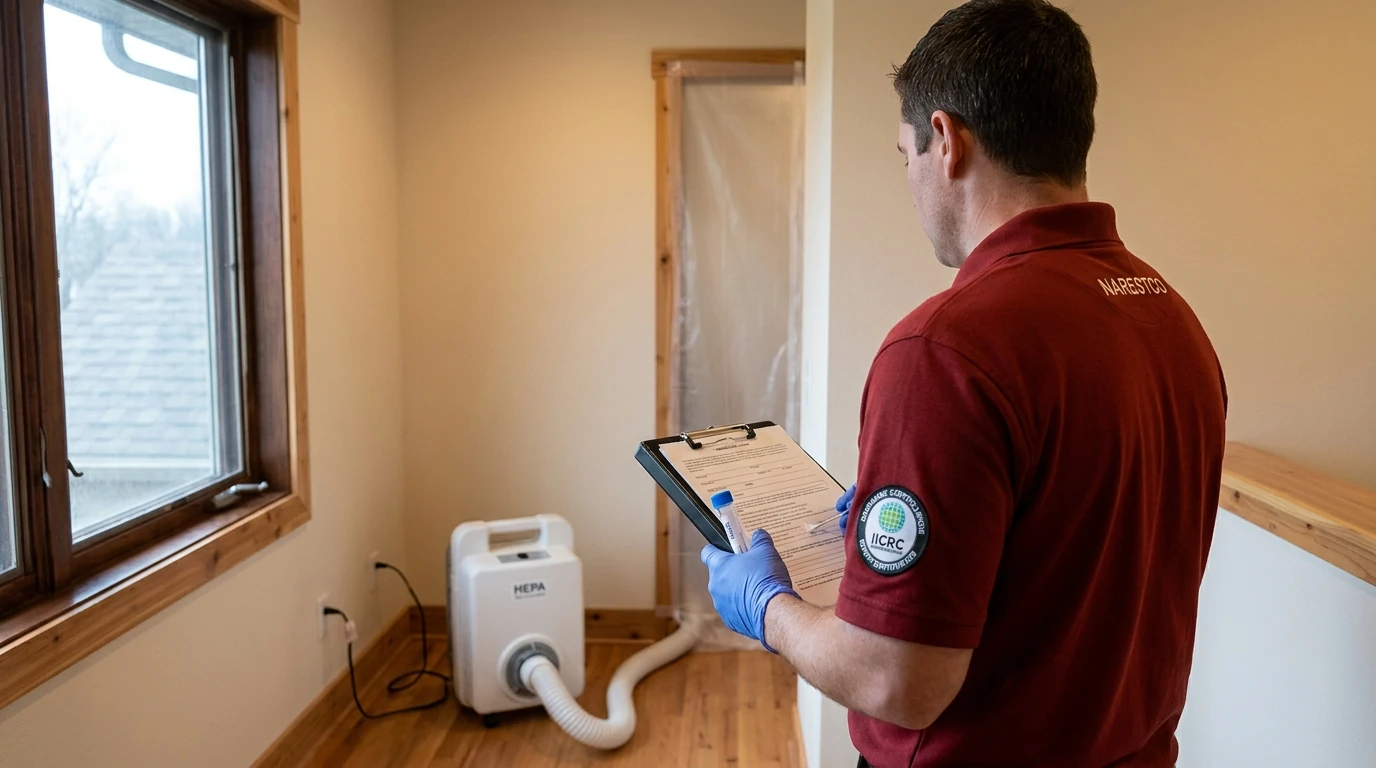
Assessment and containment. Before any cleaning begins, the crew evaluates the full extent of contamination, including areas that aren’t immediately visible, such as beneath flooring or inside wall cavities. Containment barriers (heavy poly sheeting and negative air pressure) are established to prevent cross-contamination to unaffected areas of the home.
Biohazard removal. All contaminated materials, including soft goods, flooring, drywall, and structural components where necessary, are removed and packaged in sealed, labeled biohazard containers. Washington State and federal OSHA regulations govern how bloodborne pathogen materials are handled, transported, and disposed of. Certified crews follow these protocols on every job.
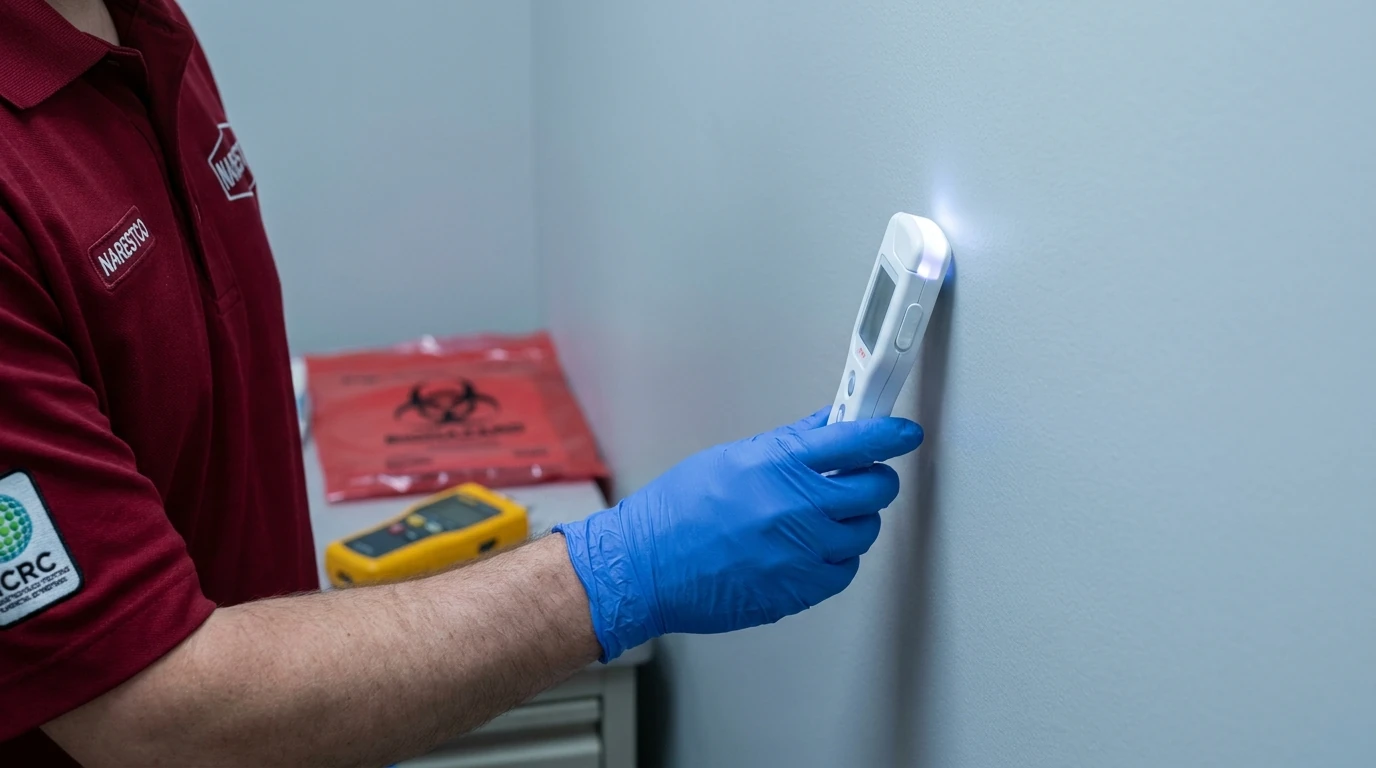
Disinfection and ATP testing. After removal, all affected surfaces are treated with EPA-registered hospital-grade disinfectants. Many professional crews use ATP (adenosine triphosphate) surface testing, a rapid swab test that detects organic residue at levels invisible to the naked eye, to verify that surfaces meet a safe threshold before containment comes down.
Odor neutralization. Biological odor is addressed with hydroxyl generators or thermal fogging, depending on the materials and space. This phase sometimes requires a second visit after the space has had time to off-gas. Rushing this step is one of the most common reasons odor returns weeks later.
Can family members clean up a trauma scene themselves?
Family members should not attempt to clean a trauma scene themselves. Beyond the emotional toll, there are serious health and legal reasons to leave this work to certified professionals.
Blood and other biological materials are regulated as potentially infectious under OSHA’s Bloodborne Pathogen Standard (29 CFR 1910.1030). Exposure without proper PPE, full Tyvek suits, N95 or P100 respirators, double nitrile gloves, and face shields, creates real risk of exposure to bloodborne pathogens including hepatitis B, hepatitis C, and HIV. Household disinfectants are not sufficient; only EPA-registered disinfectants at the correct dwell time meet the standard.
There is also the matter of documentation. Insurance claims for trauma scene cleanup require a written scope of work, itemized disposal manifests, and post-cleaning verification. A professional crew produces all of that automatically. Families who attempt cleanup themselves often find their insurance claim denied because there’s no documentation trail.
Finally: you do not need to see the scene to coordinate the cleanup. A reputable crew will handle everything from first contact through final clearance without requiring family members to be present at any point.
Does homeowners insurance cover trauma scene cleanup?
In most cases, yes, homeowners insurance covers trauma scene cleanup as a covered loss under the dwelling or additional coverages section of a standard HO-3 policy. Coverage typically includes biohazard removal, structural repairs to affected materials, and odor treatment. The Insurance Information Institute notes that policies vary significantly, so confirming coverage with your adjuster before work begins is always the right step.
A professional restoration company will work directly with your insurance carrier, submit the required documentation, and handle the claim paperwork on your behalf. You should not have to manage the insurance process while also managing a loss. If you’re uncertain what your policy covers, the post Does Homeowners Insurance Cover Biohazard Cleanup? walks through the typical policy language in plain terms.
Washington State also has a Crime Victims Compensation Program administered through the Washington State Department of Labor & Industries, which can cover cleanup costs in cases involving a violent crime, even if no arrest has been made. A professional crew familiar with Washington claims can help you access this program.
What should you do right now?
If you’re reading this in the immediate aftermath of a loss, the most important step is to secure the space and call a certified trauma scene cleanup company. Do not enter the affected area, and do not attempt to remove or clean any materials.
When you call, you don’t need to have all the details ready. A calm, professional intake coordinator will ask what you know, explain what happens next, and schedule a discreet arrival, typically in an unmarked or low-profile vehicle. National Restoration Construction responds 24 hours a day, seven days a week, and can coordinate directly with law enforcement or the medical examiner’s office if the scene has not yet been released.
For families navigating what comes after an unattended death specifically, the post What Happens After an Unattended Death Is Discovered: A Family’s Guide covers the full sequence of events from discovery through property restoration.
If you need to talk through next steps, call (206) 883-0333. The conversation is completely confidential.
About National Restoration Construction
National Restoration Construction is an IICRC-certified, EPA-certified restoration company serving the greater Puget Sound region from Federal Way, WA since 2004 (WA license NATIORC792M6). Their crews handle trauma scene cleanup, biohazard remediation, unattended death cleanup, water and fire damage, mold remediation, and full reconstruction across King, Pierce, Snohomish, and Kitsap counties. The company is BBB Accredited and Lead-Safe Certified, and works directly with homeowners’ insurance carriers on every loss.