
TL;DR: Biohazard cleanup in Federal Way and the greater Puget Sound area typically costs between $1,000 and $5,000 for a contained, single-room job, and $10,000 or more for decomposition, hoarding-related contamination, or losses that reach subflooring and structural materials. The final number depends on scene size, how far fluids traveled into porous materials, containment requirements, and regulated waste disposal fees, not an hourly labor rate.
If you’re staring down a biohazard job (an unattended death, a trauma scene, a sewage backup with contamination) and you need a real number before you call anyone, you’re in the right place. The honest answer is that no two jobs cost the same, because the variable that matters most, how far the contamination traveled into flooring, drywall, and subfloor, is different every time. What we can give you is the range, the factors that move it, and what’s actually included in that number.
How Much Does Biohazard Cleanup Cost?
Most residential biohazard cleanup jobs in Washington fall between $1,000 and $5,000, with decomposition, hoarding, or multi-room contamination pushing past $10,000. The price reflects labor, PPE, regulated disposal, and documentation, not a flat per-hour rate like a cleaning service.
Here’s a general breakdown by scenario. These are typical industry ranges for the region, not a quote, and every job gets a written scope before work starts.
| Scenario | Typical Cost Range |
|---|---|
| Contained incident, hard-surface flooring only | $1,000 - $2,500 |
| Single room with carpet or porous flooring affected | $2,000 - $4,500 |
| Unattended death, early discovery, limited spread | $2,500 - $6,000 |
| Unattended death, delayed discovery, subfloor affected | $8,000 - $15,000+ |
| Hoarding-related biohazard with structural contamination | $10,000 - $20,000+ |
| Multi-room or whole-unit contamination | $15,000 and up |
These numbers sit higher than a typical water damage job because biohazard work carries regulated disposal costs, specialized PPE, and in most cases a licensed medical waste hauler, none of which apply to routine cleaning or restoration.
Why Doesn’t Biohazard Cleanup Have a Flat Per-Hour Rate?
Biohazard cleanup is priced by scope, not by the hour, because the time and materials needed depend entirely on how far contamination traveled, not how long a crew stands in the room. A company quoting a flat hourly rate over the phone is usually guessing.
Five factors drive the real number:
- Scene type. An unattended death discovered quickly costs far less to remediate than one discovered after several days, when fluids have had time to penetrate flooring and subfloor.
- Porous material removal. Carpet, padding, subfloor, and drywall that absorbed fluids typically can’t be cleaned, they have to be removed and replaced. Removal and disposal cost scales with square footage affected.
- Containment. Negative-air containment, poly sheeting, and zippered doorways are standard practice to keep contamination from spreading to unaffected rooms, and they add labor and material cost proportional to the area involved.
- Regulated waste disposal. Biohazard waste can’t go in a regular dumpster. It’s transported by a licensed medical waste hauler and disposed of under state and local biomedical waste rules, and that disposal fee is a fixed cost per job, not a variable one.
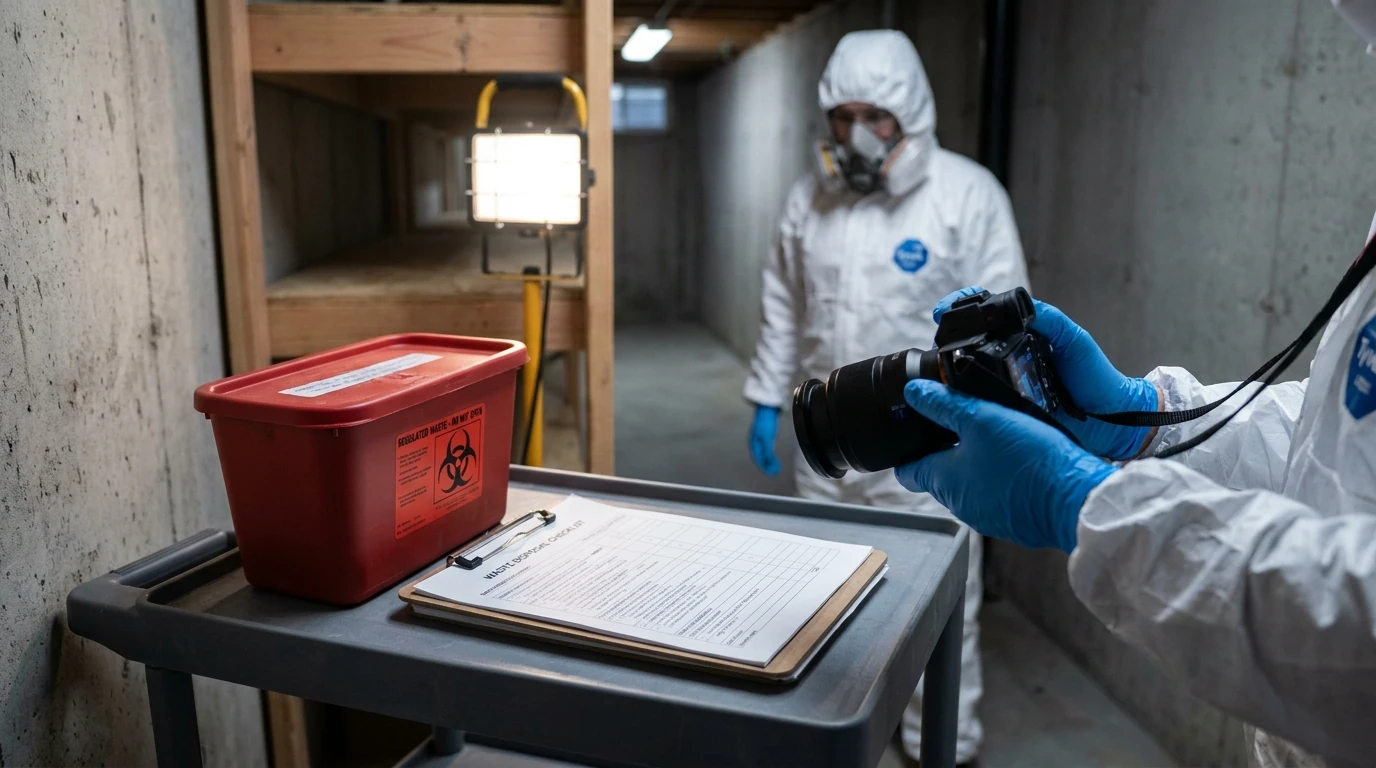
- Documentation. Photo documentation, a written scope of work, and disposal manifests protect the property owner if an insurance claim or an estate is involved. That paperwork is part of the job, not an add-on.
Washington’s biohazard disposal and decontamination standards draw on both state law (see RCW 64.44, which governs structure decontamination standards) and industry protocols like the IICRC S540 standard for trauma and crime scene cleanup. A legitimate company scopes the job against these standards, not against a clock.
What Affects the Price the Most?
The single biggest cost driver is how long contamination sat before discovery, because time determines how far fluids penetrated into flooring, subfloor, and framing. A scene cleaned within hours costs a fraction of one discovered after several days.
Other factors that move the number:
- Square footage of the affected area, not the square footage of the whole home
- Flooring type: hard surfaces (tile, sealed concrete, sealed hardwood) clean up faster and cheaper than carpet, which almost always requires removal
- Whether the scene involves hoarding conditions, which adds sorting, debris removal, and often odor remediation on top of the biohazard work itself
- Access and layout, since a basement or crawl space scene takes longer to contain and stage equipment in than a ground-floor room
- Odor remediation needs, which may call for ozone treatment or hydroxyl generators after the primary cleanup is complete
We’ve covered the insurance side of this in detail elsewhere. If you’re wondering what your policy actually pays for, read Does Homeowners Insurance Cover Biohazard Cleanup? rather than relying on secondhand advice. What matters here is that National Restoration Construction handles the insurer conversation and the paperwork directly, so the family or property owner isn’t negotiating line items with a claims adjuster during an already difficult week.
What Happens During the Cleanup, and How Long Does It Take?
Most single-room biohazard jobs take one to three days from arrival to final clearance, though decomposition or structural-removal cases can run a week or longer. The timeline depends on how much material has to be removed and dried or replaced.
The process generally follows these phases:
- Assessment and scope. A technician documents the affected area, identifies what’s salvageable versus what needs removal, and writes a scope of work before any cleanup begins.
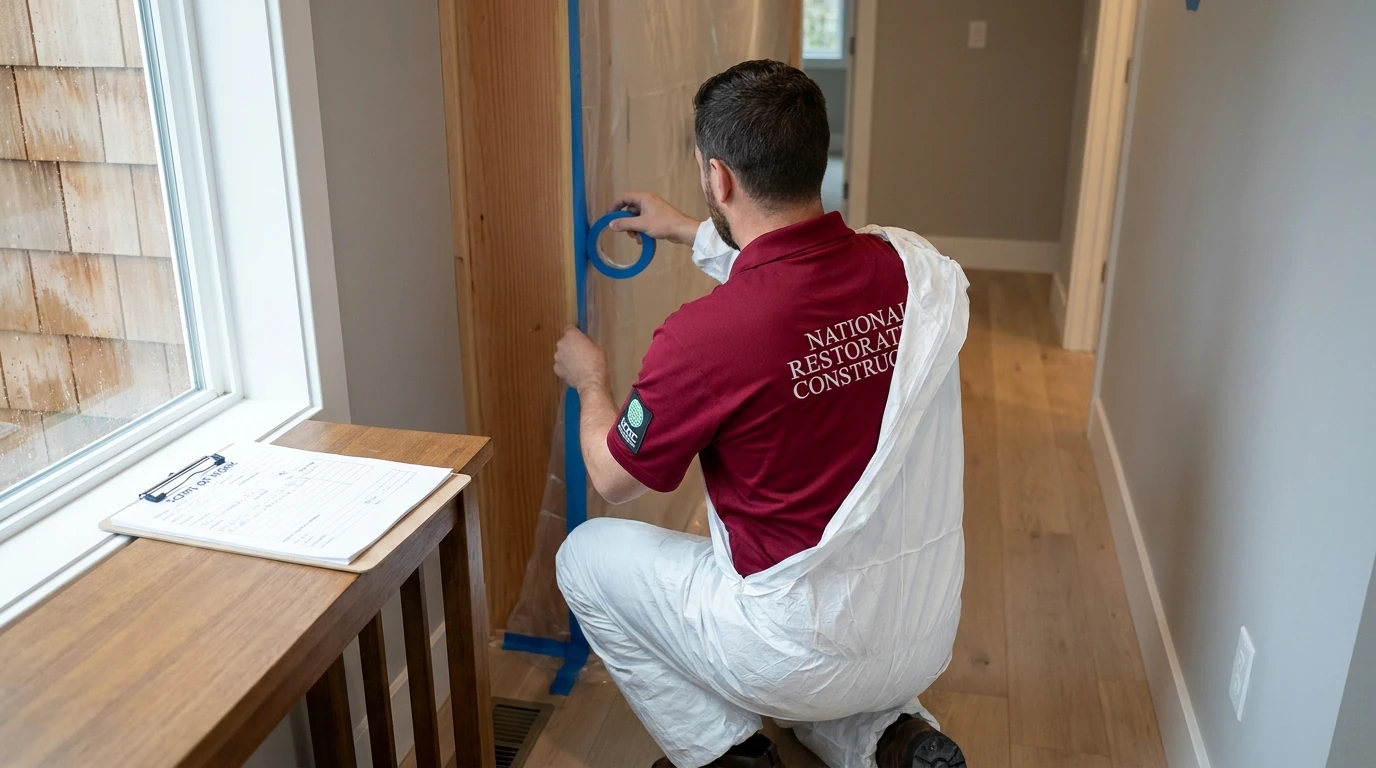
- Containment setup. Poly sheeting and negative-air equipment isolate the work area from the rest of the property.
- Removal of contaminated porous materials. Carpet, padding, drywall, or subfloor that can’t be sanitized is removed and bagged for regulated disposal.
- Cleaning and disinfection. Remaining hard surfaces are cleaned and disinfected according to EPA-registered product protocols and IICRC S540 guidance.
- Odor treatment, if needed. Ozone or hydroxyl treatment addresses residual odor once the primary contamination is removed.
- Final documentation and clearance. Photos, disposal manifests, and a closeout report are provided, which also support any insurance or estate paperwork.
National Restoration Construction crews work in full PPE, including Tyvek suits and respirators, and arrive in unmarked vehicles out of respect for the family and the neighborhood. Discretion is part of the standard, not an upcharge.
What Should You Do Next?
Start with a scene assessment, not a phone quote, because an accurate number requires seeing how far the contamination traveled. Call National Restoration Construction at (206) 883-0333 to schedule that assessment; the crew is IICRC certified and available 24/7 for exactly this kind of call.
Bring whatever documentation you have, like a police report number or the property’s insurance policy information, and the team will walk you through next steps, including what the insurer typically covers and what the written scope will include before anyone starts work.
Biohazard cleanup costs more than routine cleaning because it carries real regulatory requirements, specialized disposal, and documentation that protects you later. A written scope before work begins is the best protection against surprise costs, and National Restoration Construction provides one on every job.
About National Restoration Construction
National Restoration Construction is an IICRC-certified, EPA-certified, and Lead-Safe certified company serving Federal Way, WA and the greater Puget Sound region since 2004 (WA license NATIORC792M6). Their crews handle biohazard cleanup, unattended death cleanup, and trauma scene cleanup alongside water, fire, mold, and storm restoration work across South King County, Seattle, Tacoma, and the Eastside, available 24/7.