
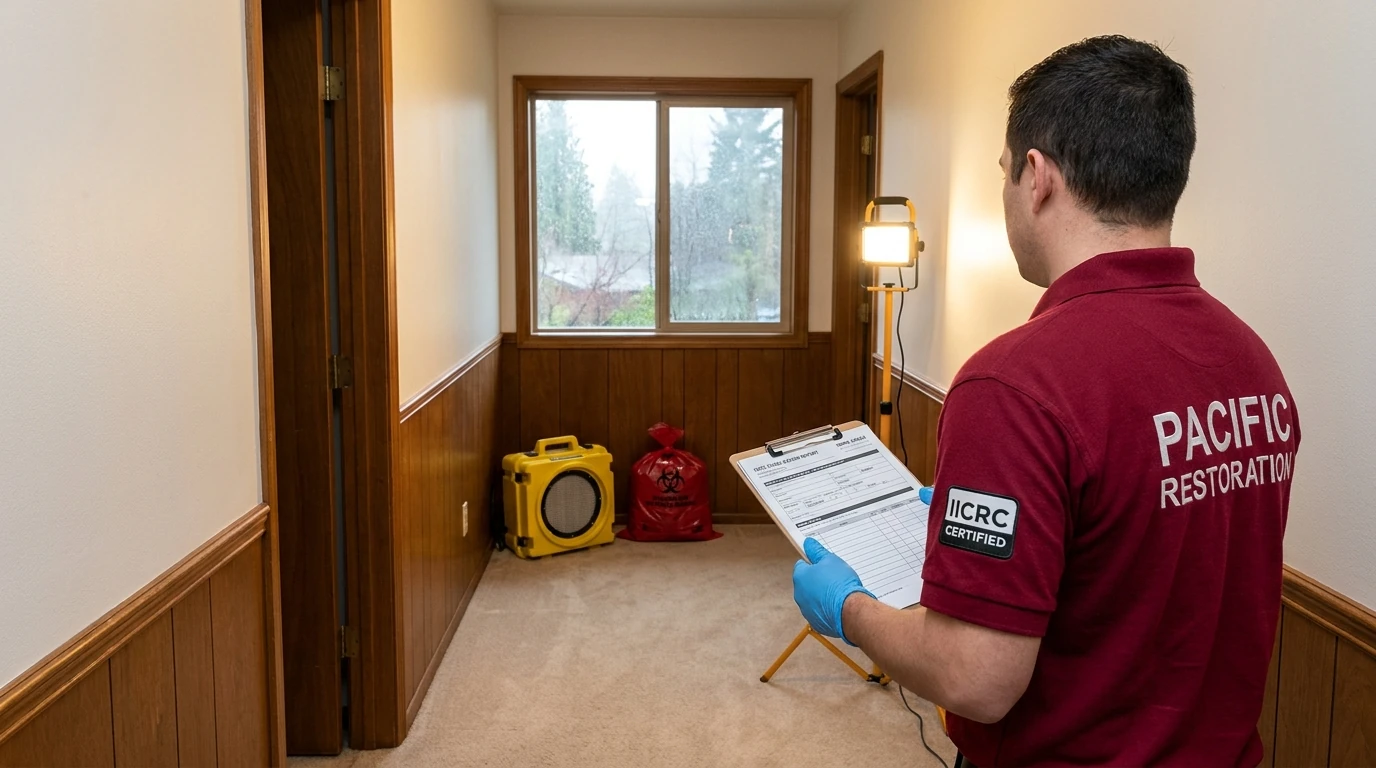
TL;DR: In Washington State, crime scene cleanup is most often paid through homeowners or renters insurance, the Washington Crime Victims Compensation (CVC) Program, or a combination of both. You are rarely left paying the full cost out of pocket. The CVC Program specifically exists to help crime victims and their families cover cleanup expenses when insurance falls short or doesn’t apply. A reputable cleanup company can help you navigate both at the same time.
If you’re reading this in the hours or days after a traumatic event at your home, the question of who pays for cleanup is one of the most practical things you can sort out right now, and the answer is better than most families expect. Washington State has a dedicated program for exactly this situation, and most standard homeowners policies cover biohazard remediation as part of the property damage coverage. You likely have more than one avenue available.
Does homeowners insurance cover crime scene cleanup?
Most standard homeowners insurance policies cover crime scene and trauma cleanup as part of their property damage or “additional coverage” provisions. When a traumatic event causes physical contamination to your home, blood, biological material, or other hazardous residue, that contamination is treated as property damage, and the remediation is a covered loss under most HO-3 and HO-5 policies.
Coverage limits vary by carrier and policy. Some policies include a specific “biohazard remediation” endorsement with a defined sublimit (commonly $2,500 to $10,000). Others cover it under the broader dwelling or personal property coverage without a separate cap. A few policies exclude it entirely, which is why it’s worth calling your agent before assuming anything.
When you file a claim, the insurer will typically send an adjuster or request documentation from the cleanup company. A qualified restoration firm will prepare a written scope of work and itemized estimate that aligns with what adjusters expect to see. If you’re unsure how the claims process works, the post “What Does Homeowners Insurance Cover and Not Cover” covers the broader framework.
One important note: filing a claim does not obligate you to use a company the insurer suggests. You have the right to choose your own contractor in Washington State.
What is the Washington Crime Victims Compensation Program?
The Washington Crime Victims Compensation (CVC) Program is a state-administered fund that pays for expenses, including cleanup costs, that result directly from a violent crime. It is run by the Washington State Department of Labor and Industries and is available to crime victims, household members, and in some cases property owners.
Cleanup and decontamination of a residence is an eligible expense under the CVC Program. The program can cover costs that insurance doesn’t reach, or it can serve as the primary payer if no applicable insurance policy exists. As of 2026, the CVC Program covers up to $40,000 in total eligible expenses per claim, with cleanup costs falling under that umbrella.
To qualify, a crime must have been reported to law enforcement. The application can be filed by the victim, a family member, or an authorized representative, and it can be filed while an insurance claim is also in process. The two programs are designed to work together, not to compete. The CVC Program pays what insurance doesn’t cover, up to the program limits.
You can apply directly through the Washington State L&I website or ask the cleanup company to help you initiate the paperwork. Most experienced trauma remediation firms have filed CVC claims before and can walk a family through the process without adding to their burden.
How much does crime scene cleanup cost in Washington?
Crime scene and trauma cleanup in Washington State typically ranges from $1,500 to $15,000 depending on the size of the affected area, the type and extent of contamination, and the structural materials involved. Larger losses, multiple rooms, porous materials like hardwood subfloor or drywall that require removal, can run higher.
Here’s what drives the cost:
- Scope of contamination. A contained area with hard surfaces costs less than a scene involving porous materials (carpet, drywall, subfloor) that must be removed and disposed of as regulated biohazardous waste.
- Regulated waste disposal. Biohazardous materials must be transported and disposed of under Washington State Department of Ecology rules. That disposal cost is real and is included in a proper estimate.
- Odor remediation. Biological contamination produces persistent odor that requires more than surface cleaning. Hydroxyl generators, ozone treatment, or thermal fogging may be needed depending on the space.
- Structural repairs. If affected materials are removed, reconstruction of drywall, flooring, or cabinetry is often a separate line item, and is typically covered under the same insurance claim or CVC application.
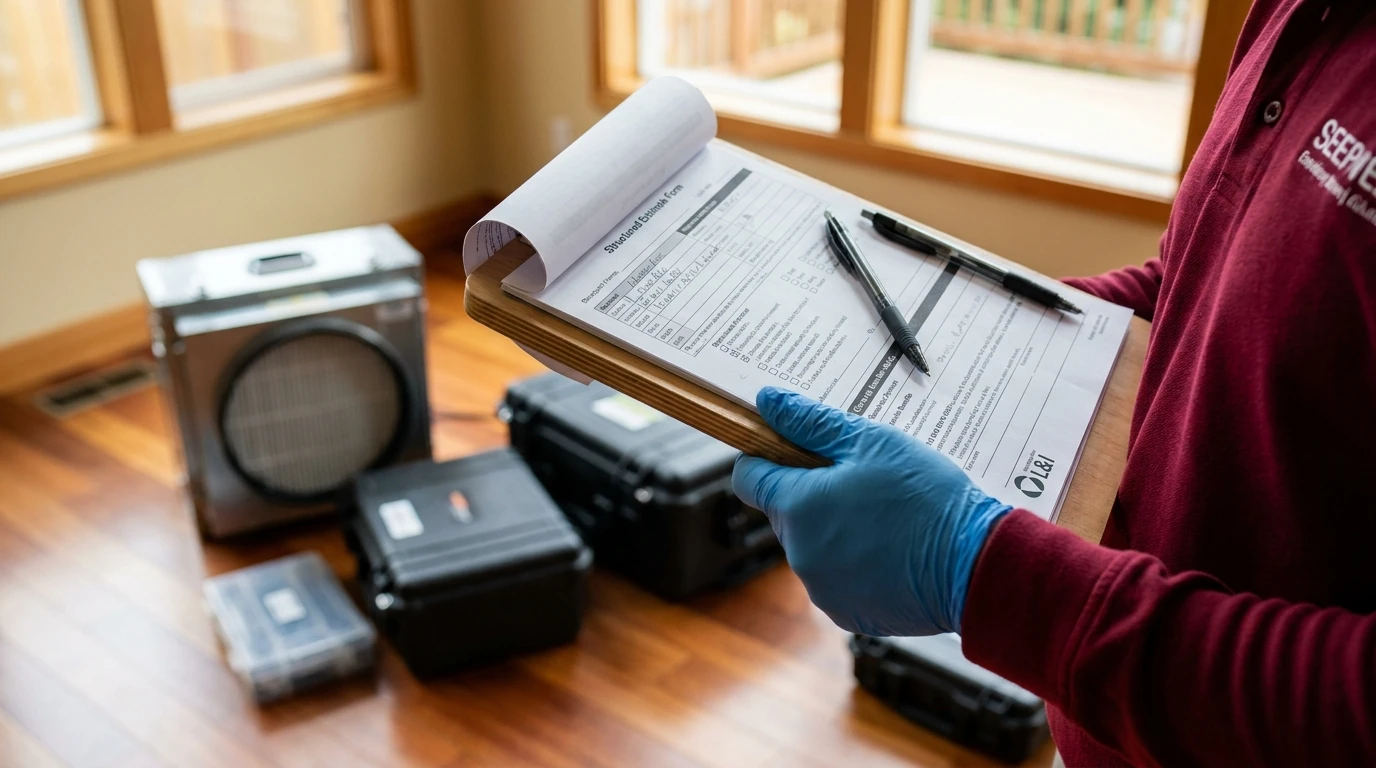
Get a written, itemized estimate before any work begins. That document is what your insurance adjuster and the CVC Program both need.
What should you do first?
Call a licensed, certified cleanup company before you call anyone else, before you attempt to clean anything yourself and before you move or disturb the scene. There are two reasons for this.
First, biological contamination is a genuine health hazard. Blood and other biological materials can carry bloodborne pathogens including HIV, hepatitis B, and hepatitis C. The CDC and OSHA both set standards for how biohazardous material must be handled, and those standards exist because exposure is a real risk, even to people who feel fine in the moment.
Second, disturbing the scene before a professional documents it can complicate your insurance claim. The cleanup company’s initial assessment and photos become part of your claim file. That documentation matters.
After you’ve contacted a cleanup company, call your insurance carrier to open a claim. You don’t need to have all the answers, just report the loss and ask what documentation they need. The cleanup company can communicate directly with the adjuster if that’s easier for you.
If the event qualifies as a violent crime, ask the cleanup company or call Washington State L&I directly to start a CVC Program application. The sooner it’s filed, the sooner that coverage is in place.
You do not have to manage this alone. A company that does this work regularly will handle the insurer communication, the CVC paperwork, the regulated waste disposal, and the remediation itself, so your family can focus on what matters.
National Restoration Construction is available around the clock and arrives discreetly, without large signage or unnecessary attention. If you need to talk through next steps before you’re ready to schedule, call (206) 883-0333.
About National Restoration Construction
National Restoration Construction is an IICRC-certified, EPA-certified restoration company serving Federal Way, Seattle, Tacoma, Bellevue, and communities throughout the Puget Sound region. Founded in 2004 and licensed with the Washington State Department of Labor and Industries (license NATIORC792M6), their crews handle trauma scene cleanup, biohazard remediation, water damage, fire damage, mold remediation, and full reconstruction. They are BBB Accredited and Lead-Safe Certified. Available 24/7.