
Lead Paint Abatement in Federal Way
24/7 lead paint abatement in Federal Way and surrounding areas. IICRC-certified, insurance billing accepted. Call (206) 883-0333.
We work with all insurance carriers and handle the claim paperwork.
Peeling paint on a window sash or porch railing built before 1978 isn’t just cosmetic. Every time that paint chips, chalks, or gets disturbed by a window sliding open, it can release lead dust fine enough to settle into carpet fibers and HVAC returns without anyone noticing. Federal Way’s older housing stock, especially homes and duplexes built through the 1960s and 70s along the Pacific Highway corridor and in the Dash Point area, carries this risk more often than newer construction. If you’re renovating, selling, or just noticed failing paint on trim, sills, or exterior siding, that’s the moment to test before it becomes a dust problem you’re breathing in.
What Lead Paint Abatement actually involves
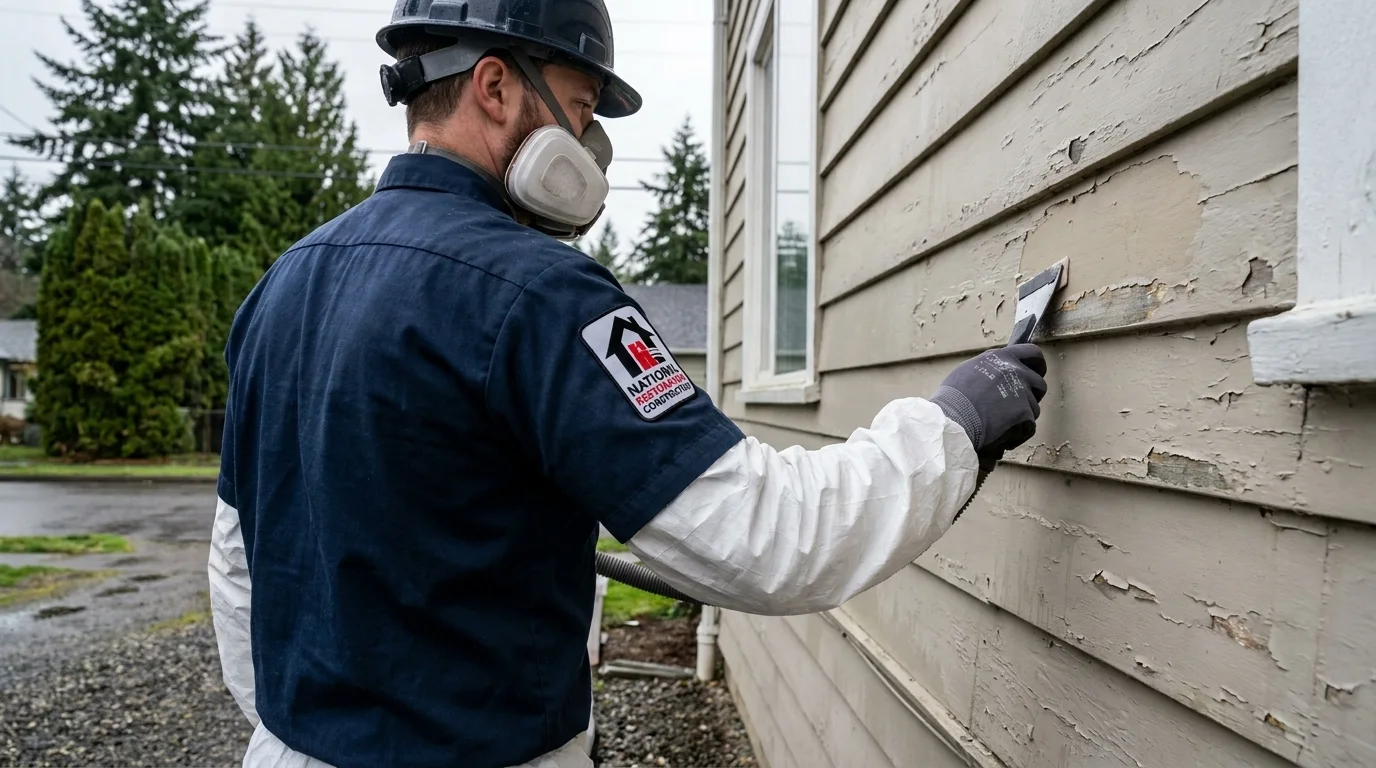
Lead paint abatement is the permanent removal or sealing of lead-based paint hazards, distinct from routine repainting. It typically applies to pre-1978 construction where original paint layers are failing, chalking, or about to be disturbed by renovation, window replacement, or demolition. Work is performed under EPA RRP (Renovation, Repair, and Painting) rule requirements, which govern containment, wet methods, and cleanup verification whenever more than a minor amount of painted surface is disturbed. Depending on scope, the job might mean stripping and repainting a few windows, full encapsulation of exterior siding, or removing and replacing trim and doors where paint failure is too advanced to seal over. Timeline runs from a single day for a small interior room to several days for full exterior abatement with weather-dependent drying and curing.
Our process
- Lead paint testing. We test suspect surfaces (paint chips, dust wipes, or XRF where applicable) to confirm lead content before any work plan is written. This tells us whether we’re dealing with isolated trim or a whole-house condition.
- Containment setup. Work areas are sealed with poly sheeting, negative air where needed, and HEPA-filtered exhaust to keep dust from migrating into living space or outside soil.
- Paint removal or encapsulation. Depending on substrate condition, we use wet scraping, chemical stripping, or component removal rather than dry sanding or open-flame burning, both of which are prohibited under RRP because they aerosolize lead dust.
- HEPA cleanup and clearance. All surfaces, floors, and sills in the work area are HEPA vacuumed and wet-wiped in sequence. Dust wipe sampling can confirm the area meets clearance levels before we close out.
- Documentation and disposal. Waste is bagged, labeled, and disposed of per hazardous material handling requirements, with records kept for your file or your buyer’s inspection report.
What separates a good lead paint abatement response from a bad one
The most common mistake on older homes is sanding or power-washing failing paint without containment, which spreads lead dust into soil, gutters, and neighboring surfaces instead of removing the hazard. A crew that isn’t EPA Certified for RRP work may skip wet methods entirely, use shop vacuums without HEPA filtration, or fail to document the before-and-after dust wipe results a buyer’s lender or an insurance carrier might ask for. Another frequent gap is treating lead paint as a one-room issue when friction surfaces like windows and doors have been shedding dust into the HVAC system for years, meaning duct cleaning needs to be part of the scope, not an afterthought. A thorough abatement plan tests before touching anything, contains the work area fully, and leaves you with paperwork proving the job was done to standard, not just a coat of fresh paint over an unresolved hazard.
What does Lead Paint Abatement cost?
Cost depends heavily on how much surface area is affected, whether removal or encapsulation is appropriate, and how much containment and disposal the job requires. Every property is different, and National Restoration Construction provides a written scope of work after testing and inspection, before any abatement begins. Homeowners insurance typically does not cover routine lead paint abatement unless it’s tied to a covered loss, such as fire or water damage that exposed old paint layers underneath.
| Scenario | Typical range |
|---|---|
| Lead dust wipe testing only | $300 - $800 |
| Single room, windows and trim | $1,500 - $4,000 |
| Full interior, multiple rooms | $5,000 - $15,000 |
| Exterior siding and trim, single-story | $8,000 - $20,000 |
| Whole-house abatement, pre-1940 construction | $15,000 - $35,000+ |
Seasonal & regional considerations
Exterior abatement work in Federal Way is weather-dependent. The region’s wet fall and winter months make exterior paint removal and recoating harder to schedule reliably, since surfaces need to stay dry during stripping and through primer cure. Spring and summer windows tend to work better for siding and trim projects, while interior abatement can proceed year-round since containment isolates the work from outdoor conditions.
Service area
We perform lead paint testing and abatement throughout Federal Way and surrounding South King County communities, including Auburn, Des Moines, Kent, and Tacoma’s northern edge, where older housing stock presents similar pre-1978 paint conditions.
If you’ve got failing paint on a home built before 1978, don’t wait for a renovation permit to force the issue. Call National Restoration Construction at (206) 883-0333 to schedule lead paint testing and get a written abatement plan before dust becomes a bigger problem.
Frequently Asked Questions
Does homeowners insurance cover lead paint abatement?
How do I know if my home has lead paint?
Is it safe to sand or scrape old paint myself before you arrive?
What's the difference between lead paint removal and encapsulation?
How long does a lead paint abatement job take?
Looking for the best lead paint abatement company in Federal Way?
National Restoration Construction provides licensed and insured lead paint abatement in Federal Way, WA and the surrounding area, and has served local property owners since 2004. Customers rate us 5.0 out of 5 stars across 64 Google reviews. We answer calls 24/7 — call (206) 883-0333 for immediate help.
Need Lead Paint Abatement now?
We respond 24/7 across Federal Way and surrounding WA cities.