
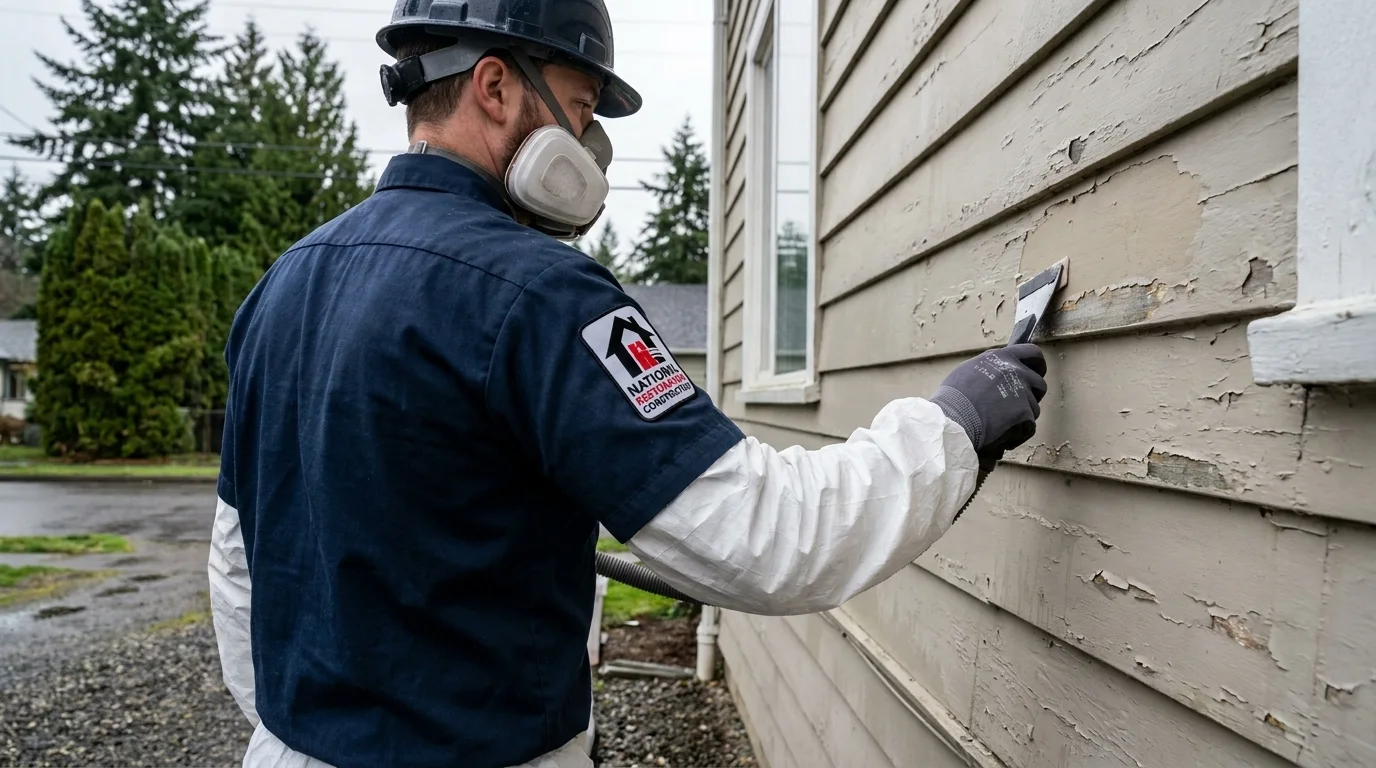
Lead Paint Abatement in Seattle
24/7 lead paint abatement in Seattle, WA. IICRC-certified, insurance billing accepted. Call (206) 883-0333.
We work with all insurance carriers and handle the claim paperwork.
Our IICRC-certified technicians are dispatched from our Federal Way, WA headquarters and are typically on-site in Seattle within 60 minutes of your call.
Lead paint abatement in Seattle almost always starts with a specific trigger: a window replacement on a 1920s Craftsman in Wallingford, a kitchen remodel in a Beacon Hill bungalow, or a pre-sale inspection on a Queen Anne four-square that turns up failing paint on the exterior trim. Because so much of the city’s housing stock predates the 1978 federal lead paint ban, the question in Seattle usually isn’t whether a property has lead paint, it’s how many layers of it are under the current coat and what disturbing them is going to require.
Why Seattle’s Older Homes Still Have Lead Paint
Neighborhoods like Magnolia, Queen Anne, and Ballard were built out heavily between 1900 and the 1940s, and a lot of that original woodwork, window trim, and plaster is still in place under decades of repainting. Seattle’s wet climate compounds the problem: moisture intrusion around older window sashes and exterior siding causes paint to alligator and flake well before a homeowner plans a renovation, which means chips end up in garden beds and under foundation plantings. In neighborhoods near Discovery Park and along the bluffs in Magnolia, that matters for soil testing too, since lead-contaminated chips can migrate into yards where kids and pets spend time. Interior plaster walls common in these homes also tend to hide multiple paint generations, so what looks like a simple scrape-and-prime job on a Fremont rental can turn into a full containment project once testing confirms lead in the base coats.
Our Lead-Safe Abatement Process
We start with EPA RRP-compliant testing to confirm lead content before any surface is disturbed, since guessing based on a home’s age alone isn’t reliable enough for permitting or disclosure purposes. Once lead is confirmed, our crews set up containment using poly sheeting and negative air pressure, sized to the room or exterior zone being worked rather than the whole structure, which keeps occupied parts of a Capitol Hill rowhouse or a Ballard duplex livable during the job. Removal methods are chosen based on substrate: wet scraping and chemical stripping for plaster and trim, controlled removal for full component replacement on windows and siding. All debris is bagged, labeled, and disposed of according to Washington state hazardous waste handling rules, and we run a final clearance check before the containment comes down.
Scheduling & Permitting in Seattle
We run abatement crews out of Federal Way up I-5 into Seattle regularly, covering Queen Anne, Magnolia, and the Ballard and Wallingford corridor near Green Lake without the project needing to sit on a waitlist for weeks. Exterior work gets scheduled around Seattle’s rain patterns, since containment and drying both perform better in the drier stretches between fall and spring storms. If a property sits in a historic district overlay, which is common in parts of Capitol Hill and West Seattle, we also build in time for any exterior alteration review before abatement begins, so the paperwork doesn’t hold up the actual work.
Local note
One thing that catches Seattle homeowners off guard: King County’s older rental stock, particularly duplexes and triplexes built before WWII in zip codes like 98103 and 98117, often has lead paint layered under multiple coats of oil-based paint from the 1960s and 70s. That combination makes standard heat-gun stripping risky, since oil-based topcoats can off-gas at lower temperatures than expected. We test paint layer by layer rather than assuming uniform composition across a wall or window unit, which avoids surprises mid-project.
If you’re planning a renovation on a pre-1978 Seattle property, whether it’s a Queen Anne craftsman or a rental near Beacon Hill, testing before demo starts is the step that protects both your timeline and your budget. Call National Restoration Construction at (206) 883-0333 to schedule lead paint testing or abatement, and we’ll walk you through what Seattle’s older building stock typically requires before a single wall gets opened up.
Serving Seattle from our Federal Way headquarters — ★ 5.0 · 64 Google reviews
“National Restoration Construction were great to work with. Responsive, available, efficient and polite. Great quality work.” — Lauren, September 2026Read our reviews on Google →
Lead Paint Abatement in Seattle: Service Coverage
Frequently Asked Questions
How fast can you arrive for lead paint abatement in Seattle?
How do I know if my Ballard or Wallingford home needs lead paint testing before a remodel?
Does Seattle's rain affect how you handle exterior lead paint abatement?
Are older rental duplexes in zip codes like 98103 and 98117 more likely to have multiple lead paint layers?
What does your lead paint abatement process actually involve once testing confirms lead?
Can you work around historic district rules in Capitol Hill or West Seattle during abatement?
Will my homeowners insurance cover lead paint abatement in Seattle?
Lead Paint Abatement response in Seattle
Most Seattle calls see a technician on-site within 60 minutes from our Federal Way headquarters.