
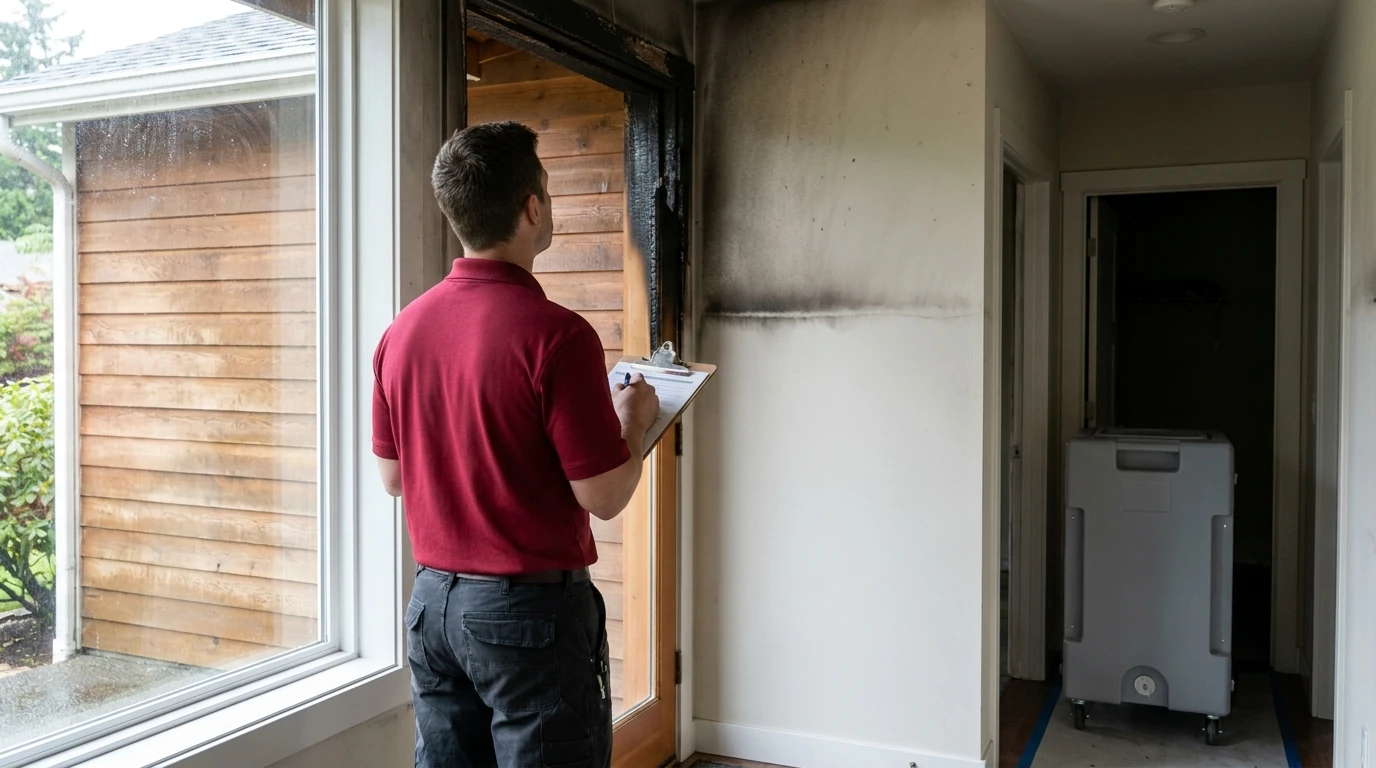
For house fire cleanup in Federal Way, WA, call National Restoration Construction at (206) 883-0333. The company answers 24/7, carries IICRC certification and a Washington State L&I General Contractor Certificate of Registration, and holds a 5.0 rating across 65 Google reviews.
That said, who you call FIRST depends on where you are in the first hour after the fire department clears the house. Here’s how to sort that out, and what actually happens once you make the call.
Do You Call the Fire Cleanup Company or Someone Else First?
Call 911 and your utility company before anyone else if the fire is still active, there’s a gas smell, or a utility line is damaged. Fire suppression and life safety always come first, and Federal Way Fire Department or Puget Sound Energy need to confirm the structure is safe to re-enter before any cleanup crew can start work.
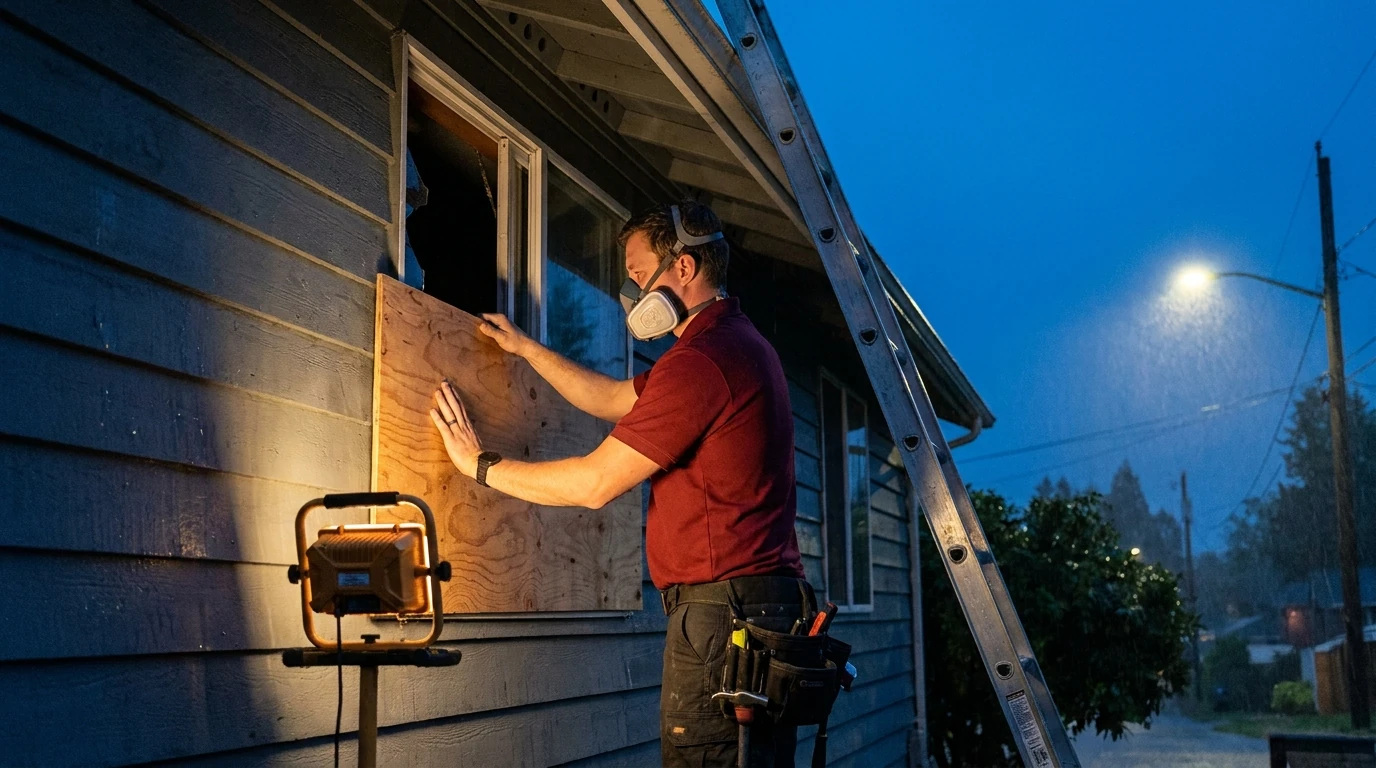
Once the fire marshal releases the property, the next call is a restoration company, not a general contractor and not your insurance adjuster alone. A licensed restoration company can board up broken windows and a damaged roofline the same day to stop weather and theft exposure, something that matters in Federal Way’s wet climate where an unprotected opening lets rain into Twin Lakes and Steel Lake area homes within hours. Waiting on an adjuster appointment before securing the structure usually costs more damage, not less.
Call your insurance company after the structure is secured, not before. Most homeowners policies cover sudden fire and smoke damage, including the structure, contents, and often temporary living expenses, according to the Insurance Information Institute. A restoration company that documents the loss with photos and a written scope before demolition starts gives the adjuster what they need to move the claim forward, which protects your payout more than calling the insurer first and waiting for instructions.
What Happens When You Call for House Fire Cleanup?
The first call is a short intake: your address, whether the fire department has cleared re-entry, and what rooms or floors were affected. Have your insurance company name and claim number ready if you already filed, though it’s fine if you haven’t yet. You’ll also want to know whether the power and water are currently on or shut off.
On arrival, the crew’s first jobs are board-up and tarping, a walkthrough to document every affected room with photos, and air quality control: HEPA air scrubbers run early to pull soot particulate out of the air before anyone spends extended time inside. Smoke and soot removal follows the ANSI/IICRC S700 Standard for Professional Fire and Smoke Damage Restoration, which governs how different materials (drywall, hardwood, fabric, HVAC ductwork) get cleaned, sealed, or removed depending on how deep the smoke penetrated.
Contents that can be saved get inventoried and moved to pack-out storage for cleaning off-site; contents too damaged to restore get documented for the claim before disposal. None of this moves fast if the house still smells like smoke in every room, soot residue clings to drywall after a quick wipe, or char is visible past the room of origin. Those are signs the loss goes beyond a surface cleaning and into full S700 remediation.
A Few Federal Way Specifics Worth Knowing
Older ramblers near Dash Point and Redondo often have original single-pane windows and minimal attic ventilation, which means heat and smoke travel differently through the roof structure than in newer construction near The Commons mall. A board-up crew familiar with the area knows to check attic smoke staining even when the fire stayed on one floor.
SR-99 and I-5 traffic patterns also affect how fast a crew can reach a property during peak hours, so if you’re calling from a neighborhood further from Pacific Highway, mention your cross streets when you call. It helps with routing.
For what to do in the hours right after the fire department leaves, our guide on what to do after a house fire covers the full 72-hour checklist. If you’re still working out what your policy actually pays for, does homeowners insurance cover fire damage breaks down typical coverage and common exclusions.
If the house is cleared and you’re standing in it deciding what to do next, the fastest path forward is getting a written scope of work started before more soot sets into porous materials. Call National Restoration Construction at (206) 883-0333 to start that process.