
If you’re standing in front of a fire-damaged home trying to figure out whether your insurance policy will actually pay, the short answer is yes, most standard homeowners policies cover accidental fire damage, and that coverage extends further than many policyholders realize. It includes not just the structural damage from flames, but smoke penetration, soot residue on contents, and even the water damage caused by firefighting efforts. What you need to understand is the scope of that coverage, the exclusions that can derail a claim, and the documentation steps that separate a smooth payout from a prolonged dispute.
What a Standard HO-3 Policy Covers After a Fire
The HO-3 is the most common homeowners policy form in the United States, and fire is one of its named covered perils. Under a standard HO-3, you can expect coverage across four categories:
Dwelling coverage (Coverage A) pays for structural repairs, framing, drywall, roofing, flooring, electrical, HVAC, and anything else physically attached to the home. If the structure is a total loss, Coverage A pays up to your dwelling limit, which should reflect the cost to rebuild (not the market value of the home).
Personal property coverage (Coverage B or C depending on the insurer) covers your belongings, furniture, electronics, clothing, appliances. Most policies pay actual cash value (ACV) by default, which factors in depreciation. If you have a replacement cost value (RCV) endorsement, you’re paid what it actually costs to replace the item new. That distinction matters enormously on a large loss.
Additional living expenses (ALE or Coverage D) covers the cost of temporary housing, meals, and other increased living costs while your home is uninhabitable. Policies typically cap this at 20-30% of your dwelling limit or a set dollar amount. Keep every receipt, hotels, restaurants, laundry, storage.
Smoke and soot damage is covered under the same fire peril. This is important because smoke damage is often more extensive than the fire itself. Smoke travels through HVAC systems, penetrates wall cavities, and deposits acidic soot on every surface it contacts. Soot begins etching porous materials within 24-48 hours, and the remediation cost can rival the structural repair cost on a contained fire. Your policy covers it.
Firefighting water damage is also covered. When the fire department suppresses a structure fire, they can discharge thousands of gallons of water into the building. That water saturates framing, subfloor, insulation, and contents. Because the water damage was caused by a covered peril (the fire), your policy covers it. This is a common point of confusion, policyholders sometimes assume they need a separate water damage claim. You don’t. It flows from the fire claim.
For a deeper look at how water damage coverage works as a standalone issue, see our companion post on whether homeowners insurance covers water damage.
The Exclusions That Can Reduce or Deny Your Claim
Fire coverage is broad, but it is not unlimited. Three exclusions come up most often in disputed fire claims.
Arson or intentional acts. If the fire was set intentionally by the policyholder, or in some policy language, by any insured on the policy, the claim will be denied. Insurers investigate origin and cause on significant fire losses. A fire investigator’s report is standard on claims above a certain threshold. If the cause is undetermined or suspicious, the insurer may delay payment pending investigation. This is not something to navigate alone; a public adjuster or attorney can be valuable if you’re facing a bad-faith delay.
Earthquake-caused fire. Standard HO-3 policies exclude earthquake damage, and that exclusion extends to fires ignited by an earthquake (ruptured gas lines, downed electrical, etc.). If you live in a seismically active area and don’t carry earthquake endorsement coverage, a post-quake fire may not be covered. Earthquake endorsements are available separately and are worth evaluating if you’re in a region with meaningful seismic risk.
Flood-adjacent fire. This one surprises people. If a flood event (rising water, storm surge, overland flooding) caused or contributed to the fire, for example, floodwater shorting out electrical systems, your standard homeowners policy may exclude it because the originating cause was flood, which is excluded from HO-3. Flood coverage requires a separate NFIP or private flood policy. The line between a fire claim and a flood claim can get complicated when both events occur in the same loss event; document the sequence of events carefully.
Vacancy and neglect. Many policies include a vacancy clause that reduces or eliminates coverage if the home has been unoccupied for 30-60 consecutive days. If you own a rental or second home that was vacant at the time of the fire, check your policy’s vacancy provisions before filing.
How to Document a Fire Damage Claim Effectively
Documentation is where fire claims are won or lost. Insurers are not adversaries by default, but they are operating on the information you give them. Incomplete documentation produces incomplete settlements.
Secure the scene before cleanup begins. Your insurer will send an adjuster, and they need to see the damage in its post-fire state. Do not begin demolition, debris removal, or aggressive cleaning before the adjuster has documented the loss, unless the property poses an immediate safety hazard. Emergency stabilization (boarding windows, tarping roof penetrations, extracting firefighting water) is appropriate and expected. Wholesale cleanup before documentation is not.
Photograph everything systematically. Room by room, floor to ceiling. Photograph structural damage, smoke staining, soot deposits on contents, water damage from firefighting. Photograph serial numbers on appliances and electronics before they’re moved. Photograph the contents of every closet and cabinet. The more thorough your visual record, the harder it is for an adjuster to dispute the scope.
Create a contents inventory. This is the most time-consuming part of a fire claim and the part most policyholders underestimate. Go room by room and list every item, its approximate age, and its replacement cost. Receipts help but aren’t required. Credit card statements, Amazon order history, and retailer loyalty program purchase history can reconstruct purchase records. If you had a home inventory document before the fire, this is straightforward. If you didn’t, start one now for your next home.
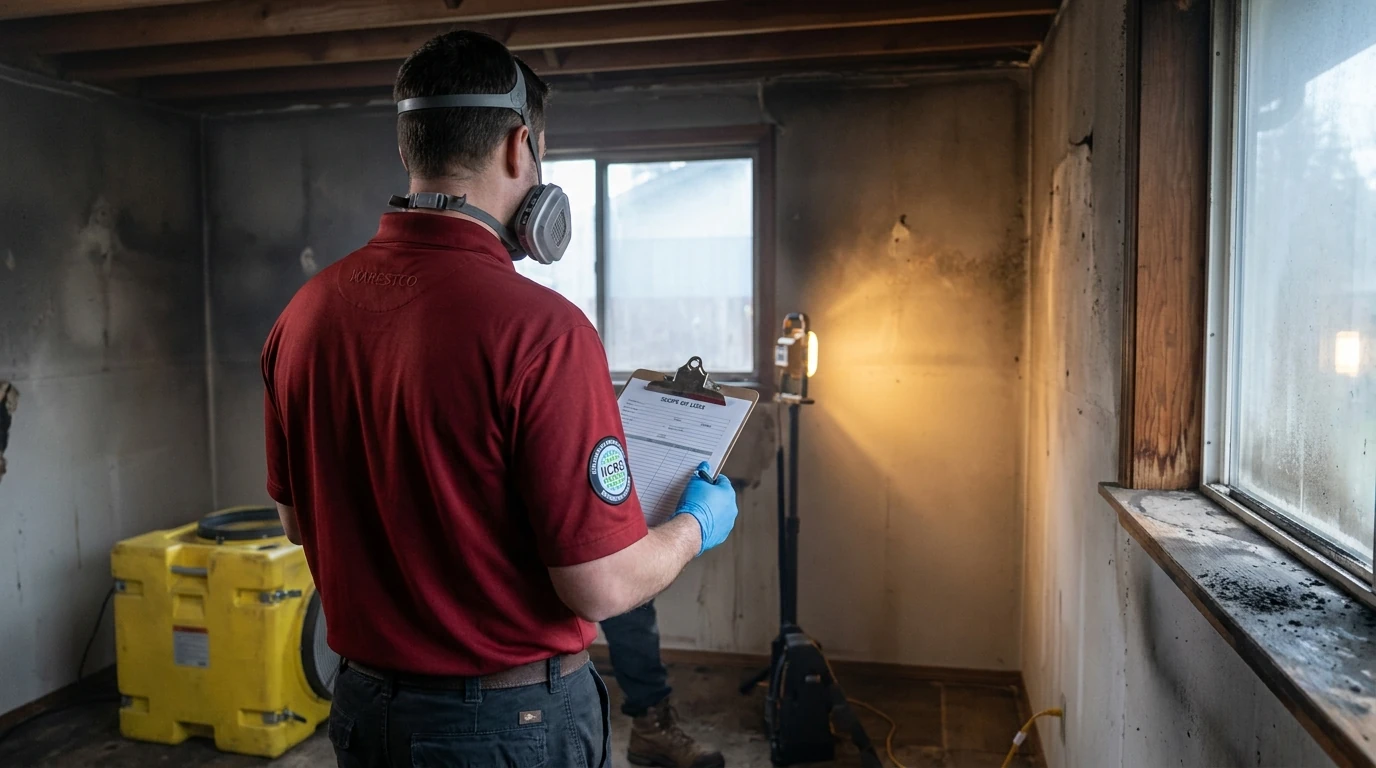
Get an independent scope of loss. Your insurer’s adjuster works for the insurer. A public adjuster or a licensed restoration contractor can produce an independent scope of loss that documents the full extent of damage, including hidden smoke penetration in wall cavities, HVAC contamination, and subfloor saturation from firefighting water. That independent scope gives you a basis for negotiating if the insurer’s initial estimate is low.
Understand the depreciation schedule. On an ACV policy, the insurer will depreciate your personal property. A five-year-old couch isn’t paid out at replacement cost, it’s paid at depreciated value. If you have RCV endorsement, you receive the depreciation holdback once you actually replace the item and submit receipts. Don’t leave that holdback money on the table.
What the Restoration Scope Actually Looks Like
A professional fire damage assessment goes beyond what’s visually obvious. Certified restorers following IICRC S700 (Standard for Professional Fire and Smoke Damage Restoration) will evaluate smoke migration through HVAC systems, soot pH levels on different surface types (acidic soot from synthetic materials behaves differently than protein soot from kitchen fires), and the extent of char penetration into structural members.
Smoke damage to HVAC systems is a particularly common oversight. Smoke particles pulled through the return air system deposit throughout ductwork, and if the system runs after the fire, those particles recirculate. A thorough scope includes duct inspection and, where contamination is confirmed, duct cleaning or replacement.
Odor is another line item that adjusters sometimes undervalue. Effective odor elimination after a structure fire typically requires thermal fogging, hydroxyl treatment, or ozone application, not just surface cleaning. If the odor isn’t eliminated, the home isn’t restored. Make sure your scope of loss includes odor remediation as a distinct line item.
National Restoration Construction handles both the fire damage restoration and smoke damage restoration phases under one scope, which simplifies the insurance coordination and avoids the gaps that occur when structural and contents work are split between separate contractors.
If you’re at the documentation stage and want a written scope of loss to support your claim, request a fire damage assessment through our contact page.