
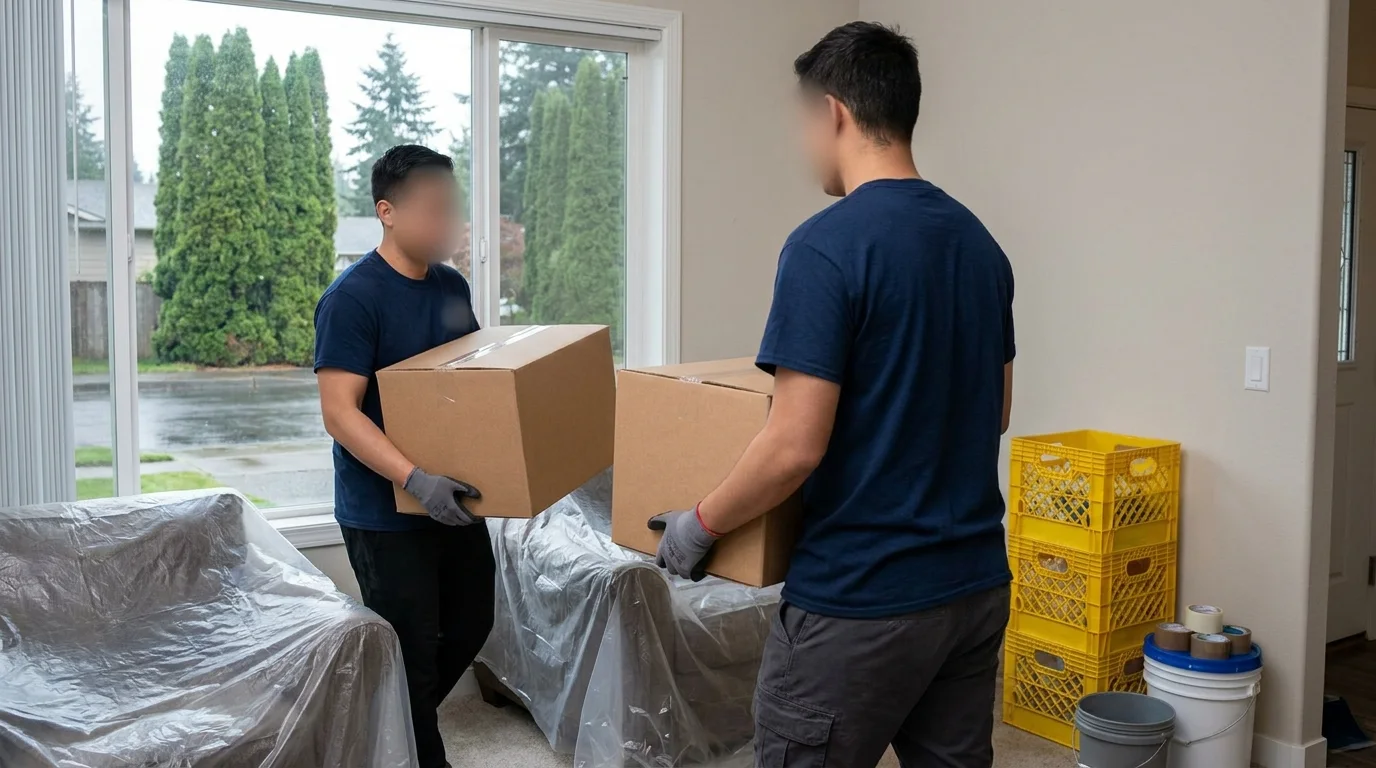
Hoarding Cleanup in Federal Way
24/7 hoarding cleanup in Federal Way and surrounding areas. IICRC-certified, insurance billing accepted. Call (206) 883-0333.
We work with all insurance carriers and handle the claim paperwork.
A hoarding situation rarely announces itself with a single event. More often, a family member passes away, a tenant vacates, or a property inspection triggers a call, and what’s behind the door has been accumulating for years. The challenge isn’t just volume. It’s the layered combination of structural concealment, compromised air quality, potential biohazard materials, and the emotional weight carried by everyone involved. That’s the specific problem hoarding cleanup addresses, and it requires a different approach than any standard cleaning or restoration service.
What hoarding cleanup actually involves
Hoarding remediation is a multi-phase process that combines debris removal, deep sanitation, structural assessment, and, when needed, coordination with public health or code enforcement. The volume of material is often the first surprise: a single-story home can contain tens of thousands of pounds of accumulated items, some with sentimental value, some hazardous, most somewhere in between.
Beyond the physical volume, years of limited airflow and organic accumulation create conditions where mold colonization, pest activity, and compromised surfaces are common findings. Flooring, subfloor, drywall, and HVAC components may all require assessment once the space is cleared. In older Federal Way housing stock, much of it built in the 1970s and 1980s, lead paint and asbestos-containing materials are a real possibility whenever demolition or abatement work follows the initial cleanup.
Timeline varies significantly by severity. A Level 3 situation (moderate clutter, limited odor, accessible pathways) might resolve in two to three days. A Level 5, structural damage, no functional utilities, biohazard presence, can take one to two weeks of staged work. We assess severity on-site before committing to a schedule, so families and property owners aren’t caught off guard.
Our process
1. Confidential on-site assessment A project lead walks the property with the client, or a designated family member or property manager, to document conditions, identify hazardous materials (sharps, chemicals, biohazard), and assign an IDA (Institute for Challenging Disorganization) severity level. This assessment drives the scope of work and determines what equipment, crew size, and disposal resources are needed before a single bag is moved.
2. Sorting and salvage before removal Items are sorted into categories: retain, donate, recycle, and dispose. This step is done collaboratively when a client or family member is present and wishes to participate. Valuables, documents, medications, jewelry, financial records, are flagged and set aside first. Nothing is discarded without documented authorization. This protects both the occupant and our crew from disputes after the fact.
3. Debris removal and gross filth remediation Once sorting is complete, bulk removal proceeds in stages, working from accessible areas inward. Where gross filth cleanup is required, spoiled food, animal waste, or other biohazard materials, our IICRC-certified technicians follow containment and PPE protocols consistent with biohazard remediation standards. Waste is separated by type and disposed of through licensed channels. Odor-generating materials are removed before any deodorization treatment begins, because masking odor over active sources doesn’t work.
4. Surface cleaning, disinfection, and odor treatment After removal, all surfaces are cleaned and disinfected using EPA-registered antimicrobials appropriate for the contamination type. Porous surfaces that can’t be adequately cleaned, carpet, drywall, insulation, are documented and, if the client approves, removed. Odor treatment follows: hydroxyl generators and thermal fogging address embedded odors in structural cavities and HVAC systems that surface wiping alone won’t reach.
5. Structural assessment and restoration referral Once the space is clear and clean, we conduct a structural walkthrough to identify damage that was concealed by the accumulation, subfloor rot, pest damage, plumbing leaks, mold growth. As a licensed general contractor (Certificate of Registration #NATIORC792M6), we can move directly into repair and reconstruction work rather than handing the property off to a second vendor. That continuity matters when a property needs to pass inspection or return to habitability quickly.
What separates a good hoarding cleanup from a bad one
The most common failure point is skipping the sort-and-salvage step to move faster. Crews that bag everything indiscriminately expose their clients to the loss of irreplaceable documents, medications, or valuables, and expose themselves to liability. A thorough intake and documented authorization process isn’t bureaucratic overhead; it’s what makes the cleanup defensible.
The second failure is treating gross filth cleanup as a surface problem. Odor and contamination that have penetrated subfloor, wall cavities, or ductwork will return within weeks if the source material isn’t removed and the underlying structure isn’t treated. Insurance adjusters reviewing a remediation claim will look for moisture readings, air quality documentation, and disposal manifests, not just before-and-after photos.
Lead-Safe practices matter in pre-1978 construction. Any disturbance of painted surfaces during a hoarder home cleaning project in older Federal Way properties requires compliance with EPA RRP (Renovation, Repair, and Painting) rules. We are a Lead-Safe Certified Firm and carry EPA certification for this work.
Service area
National Restoration Construction is headquartered in Federal Way and serves the surrounding South King County and Pierce County region, including Auburn, Kent, Renton, Tacoma, Puyallup, Des Moines, Burien, and Tukwila. City-specific service pages for hoarding cleanup in each of these communities link back to this page for full process detail.
If you’re coordinating a hoarding cleanup for a family member’s home, a rental property, or an estate, the next step is a confidential on-site assessment, no obligation, no judgment. Call National Restoration Construction at (206) 883-0333 to schedule your property walkthrough and get a written scope of work before any removal begins.
Frequently Asked Questions
How do you handle items that may have sentimental or monetary value during a hoarder home cleaning?
What IDA severity levels do you work with, and how does the level affect the timeline?
When does hoarding cleanup cross into biohazard remediation, and how is that handled differently?
Does homeowner's insurance typically cover hoarding cleanup, and what documentation supports a claim?
How do you handle privacy for neighbors and building occupants during a hoarding cleanup project?
Looking for the best hoarding cleanup company in Federal Way?
National Restoration Construction provides licensed and insured hoarding cleanup in Federal Way, WA and the surrounding area, and has served local property owners since 2004. Customers rate us 5.0 out of 5 stars across 63 Google reviews. We answer calls 24/7 — call (206) 883-0333 for immediate help.
Need Hoarding Cleanup now?
We respond 24/7 across Federal Way and surrounding WA cities.
Related Coverage
- Our Restoration Services
- Contact National Restoration Construction
- Hoarding Cleanup in Auburn
- Hoarding Cleanup in Bellevue
- Hoarding Cleanup in Bremerton
- Hoarding Cleanup in Everett
- Hoarding Cleanup in Gig Harbor
- Hoarding Cleanup in Kent
- Hoarding Cleanup in Kirkland
- Hoarding Cleanup in Port Orchard
- Hoarding Cleanup in Redmond
- Hoarding Cleanup in Renton
- Hoarding Cleanup in Seattle