Soot Removal in Gig Harbor
24/7 soot removal in Gig Harbor, WA. IICRC-certified, insurance billing accepted. Call (206) 883-0333.
We work with all insurance carriers and handle the claim paperwork.
Our IICRC-certified technicians are dispatched from our Federal Way, WA headquarters and are typically on-site in Gig Harbor within 60 minutes of your call.
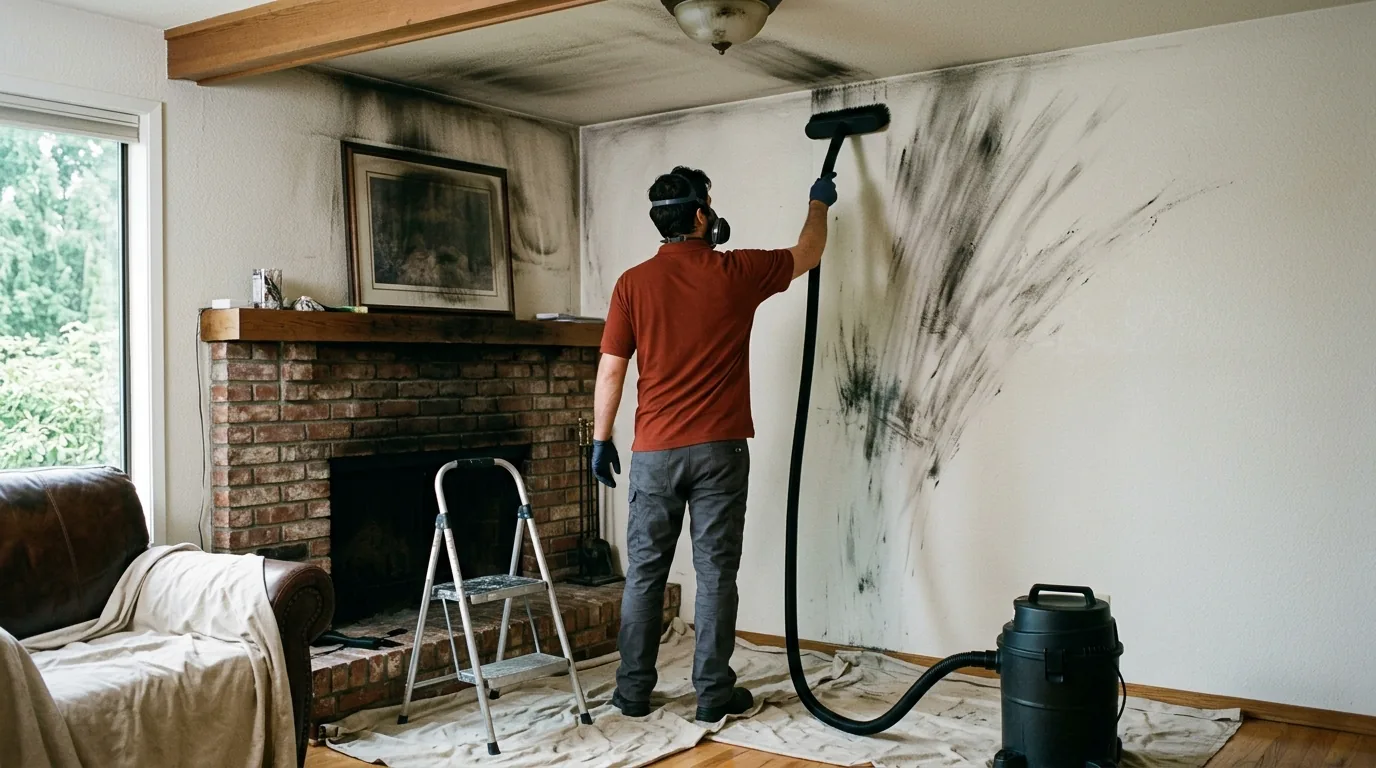
Soot from a kitchen fire or chimney blowback doesn’t just stain — in Gig Harbor’s persistent marine air, it bonds differently. The salt-laden moisture rolling off the harbor and through the Narrows keeps interior surfaces slightly tacky year-round, which means dry soot particles that might brush off a wall in a drier climate instead embed into paint, wood grain, and the porous surfaces of older Harborview and Millville cottages. What looks like a surface problem often isn’t. National Restoration Construction has handled post-fire soot cleanup across the peninsula since 2004, and the coastal conditions here change how every step of the job gets done.
Why Gig Harbor Homes Hold Soot Differently
The fishing-era houses and mid-century cottages clustered near the Gig Harbor waterfront and up toward Millville were built with materials that absorb airborne particles readily — old-growth fir paneling, plaster-over-lath walls, and cedar siding that has spent decades drinking in marine humidity. When a fire produces soot in one of these homes, the residue migrates further and faster than it does in newer construction. Smoke follows air pressure, and those same vented crawl spaces that make moisture intrusion a constant headache in this ZIP code (98335) also give soot a pathway into wall cavities and subflooring long after the flames are out.
Protein soot — the nearly invisible, intensely odorous residue from kitchen fires — is especially problematic here. In a humid environment, protein residue bonds to grease-seasoned surfaces like cast-iron stovetops and wood cabinetry with a grip that standard wiping won’t break. Dry soot from structural fires behaves differently but is no less persistent on the textured plaster ceilings common in pre-1960 Harborview homes. Identifying which type of soot you’re dealing with before touching a surface is the difference between a clean restoration and a smeared, permanently stained wall.
Our Soot Removal Process in Gig Harbor
The first thing our technicians do on arrival is scope the thermal path — the route the smoke actually traveled through the structure. In a tight harbor-rim lot where rooms share walls with an attached garage or a converted fishing shed, that path can be non-obvious. We use negative air pressure and HEPA-filtered containment to stop soot from migrating further while work is underway.
Surface cleaning follows a strict sequence: dry chemical sponges first on loose particulate, then appropriate wet cleaning agents matched to the substrate. On the plaster walls and fir trim common in older Gig Harbor homes, we use pH-neutral detergents and low-moisture application to avoid raising grain or softening plaster keys. Porous masonry around fireplaces — a frequent soot source given how many waterfront homes rely on wood-burning inserts — gets treated with a separate alkaline cleaner formulated for masonry rather than painted drywall. Every surface type gets its own protocol; using the wrong chemistry on the wrong substrate causes secondary damage.
Odor control runs parallel to surface cleaning, not after it. Thermal fogging and hydroxyl generation address the volatile compounds still off-gassing from soot-saturated materials. In a home where marine moisture has already driven those compounds deeper into wood fibers, skipping this step means the smell returns within weeks.
Response Time from Federal Way to Gig Harbor
Our headquarters is in Federal Way, which puts us roughly 20–25 minutes from the Tacoma Narrows Bridge under normal conditions — closer than most Seattle-based contractors. From the bridge, we’re typically another 10–15 minutes to neighborhoods like Artondale or Crescent Valley, and slightly longer to the more rural addresses near Kopachuck State Park on the western edge of the peninsula. Total on-site time from a confirmed dispatch runs 35–50 minutes for most Gig Harbor addresses.
One real-world variable: toll-plaza backups on the Narrows Bridge during peak commute hours can add 10–20 minutes to that estimate. We account for this in our dispatch routing and, for confirmed structural fire situations, will coordinate with the closest available crew rather than routing exclusively from Federal Way.
Gig Harbor Insurance Coordination
Soot damage is a covered loss under most standard homeowner policies when it results from a sudden, accidental fire — which describes the majority of calls we receive. We document the loss thoroughly from the first hour on-site: photos, moisture and soot readings, substrate assessments, and a written scope that aligns with the line-item format your adjuster expects. We work directly with adjusters and can provide supplemental documentation if the initial estimate doesn’t capture secondary migration into crawl spaces or wall cavities, which is common in the older housing stock near the harbor.
If your home is in an HOA community — several of the newer developments in Rosedale and along the Artondale corridor have active associations — we can provide the documentation those boards typically require before exterior work or scaffolding is staged on common-area property.
Local Note
Something worth knowing if you own one of the older cottages on the harbor rim: the combination of wood-burning fireplace inserts and the marine air that funnels through the Narrows creates a recurring creosote and light-soot buildup on chimney surrounds and adjacent walls even without a full fire event. We see this pattern regularly in the Finholm District and along Harborview Drive — homeowners who notice a persistent smoky smell and faint gray staining near the firebox often assume it’s a minor issue. It usually is, but the marine moisture that keeps that residue slightly damp also keeps it biologically active. A professional soot cleaning and a chimney inspection before the next burning season is a reasonable precaution, not an overreaction.
If you’re dealing with soot residue in your Gig Harbor home — whether from a kitchen incident, a chimney fire, or structural damage — call National Restoration Construction at (206) 883-0333. We’re IICRC Certified, EPA Certified, and licensed through WA State Labor & Industries (#NATIORC792M6). We’ll tell you honestly what the damage looks like and what it will take to clear it.
Serving Gig Harbor from our Federal Way headquarters — ★ 4.9 · 57 Google reviews
“These fellas came in when we had a water leak from a major big box store install. They came in as a third party. It did take some time, but they got everything fixed.And they went out of the way to make sure that we got what we needed.The way we needed it.” — Wesley, July 2026Read our reviews on Google →
Soot Removal in Gig Harbor: Service Coverage Map
Frequently Asked Questions
How fast can you arrive for soot removal in Gig Harbor?
How quickly can you reach a home in the Harborview or Millville area after a fire?
Does Gig Harbor's marine climate affect how long soot removal takes compared to inland homes?
Are the older cottages near the Gig Harbor waterfront harder to clean after soot damage?
What types of soot show up most often in Gig Harbor homes, and does the type change the process?
Will my homeowner's insurance cover soot cleaning in the 98335 ZIP code, and do you handle the documentation?
Soot Removal response in Gig Harbor
Most Gig Harbor calls see a technician on-site within 60 minutes from our Federal Way headquarters.