
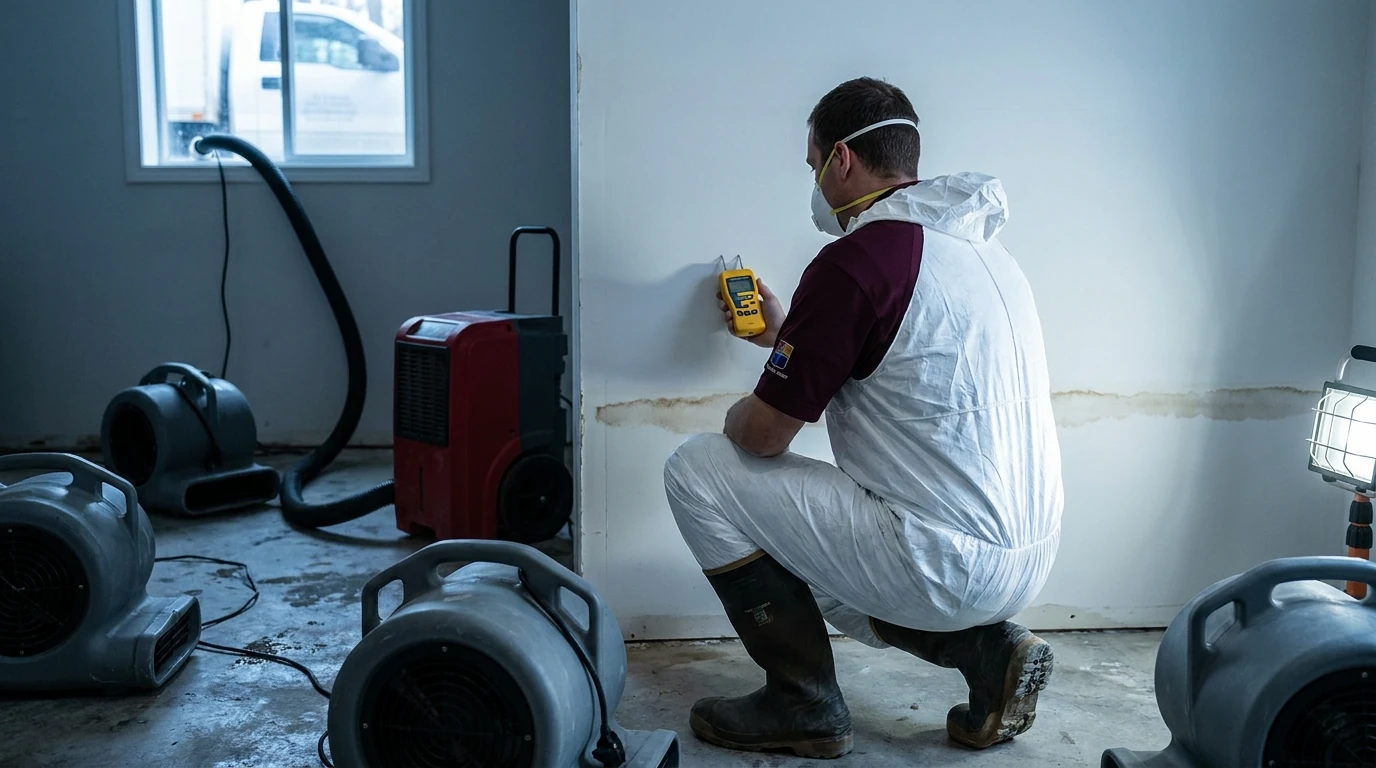
TL;DR: Sewage backing up into a basement is Category 3 black water, the most contaminated water category under the IICRC S500 standard. Shut off water use in the house, keep everyone (especially kids and pets) out of the area, and don’t touch or wade into the water. Raw sewage carries bacteria, viruses, and parasites that can cause serious illness within hours of exposure. Professional extraction, disposal of contaminated materials, and antimicrobial treatment typically take 2-4 days, with full drying and reconstruction depending on how far the water traveled.
If you just walked downstairs and found standing water with a sewer smell coming up through a floor drain, toilet, or laundry hookup, you’re dealing with a contamination event, not a simple flood. The instinct to grab a mop and start cleaning is understandable, but it’s the wrong move. Raw sewage contains pathogens that can enter the body through a small cut, a splash to the eyes, or even breathing in aerosolized particles as the water is disturbed. The first hour matters less for the cleanup itself and more for keeping everyone in the house safe until help arrives.
What Should You Do First When Sewage Backs Up Into a Basement?
Stop using water anywhere in the house, close the basement door, and keep people and pets away from the affected area until a restoration crew arrives. Running water, flushing toilets, or running the dishwasher can push more sewage into the backup and make it worse if the blockage is in a main line.
Do not attempt to wade through the water, even in boots, and do not run a wet vacuum or shop vac through it. Splashing raw sewage aerosolizes contaminated particles into the air you’re breathing. If the water is rising near outlets or a furnace, shut off electrical power to the basement at the panel if you can reach it safely without stepping into the water.
Photograph the damage from the doorway for insurance purposes, but don’t go further in. Call a restoration company that handles Category 3 water and, separately, a plumber if the backup is coming from a specific fixture rather than a municipal or septic line. National Restoration Construction answers calls 24/7 and can walk you through what to shut off before a crew is on site.
Is a Sewage Backup Actually Dangerous?
Yes. Raw sewage is classified as Category 3, or “black water,” under the IICRC S500 standard, the industry benchmark for water damage restoration, because it can contain bacteria like E. coli, viruses, and parasites that cause gastrointestinal illness, skin infections, and respiratory irritation.
Exposure risk isn’t limited to direct contact. As sewage-contaminated water sits, it can also feed rapid mold growth on drywall, carpet padding, and wood framing, particularly in a basement where humidity is already higher and airflow is limited. The CDC’s guidance on mold and moisture notes that mold can begin colonizing damp materials within 24 to 48 hours, which is why sewage cleanup and structural drying need to happen together, not as two separate problems tackled weeks apart.
Anyone with a compromised immune system, young children, or pets should stay out of the home entirely until a restoration crew confirms the area is safe. This isn’t an overreaction. It’s the same precaution IICRC-certified technicians use themselves, which is why full personal protective equipment, not just gloves, is standard on every sewage call.
How Does Professional Sewage Cleanup in a Basement Actually Work?
Professional sewage cleanup follows a set sequence: extraction, removal of contaminated porous materials, cleaning and disinfection, and monitored drying, usually completed in that order over several days.
- Source control. The crew confirms the backup source has stopped, whether that means a plumber clears a blocked line or a sump pump failure gets addressed, before extraction begins. Cleaning up water that’s still actively flowing in is wasted effort.
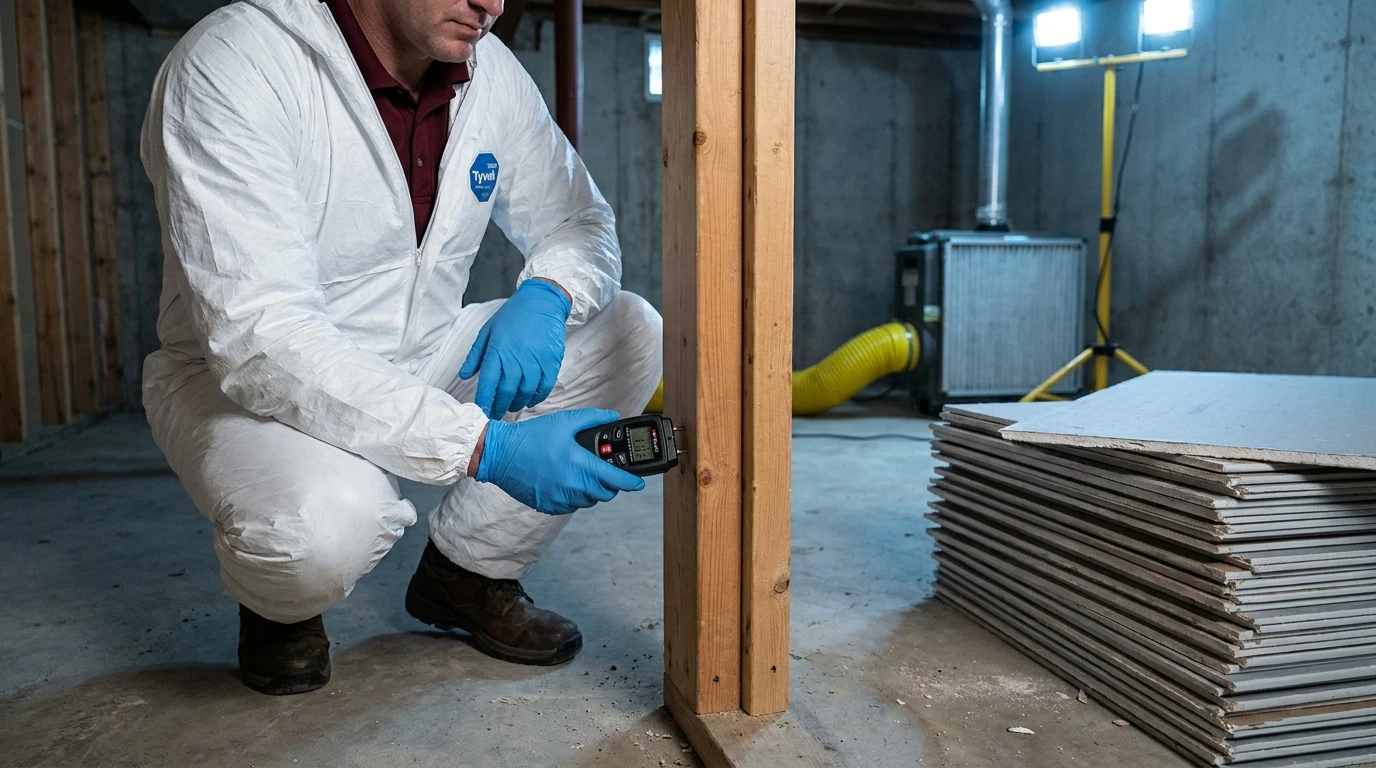
- Extraction. Technicians in full Tyvek suits, respirators, and rubber boots pump out standing sewage using truck-mounted or portable extraction equipment. This step also includes removing any solid waste and debris.
- Demolition of contaminated materials. Category 3 water that has soaked into carpet, carpet pad, drywall below the flood line, and insulation cannot be sanitized. It gets removed and disposed of, not cleaned and reused. This is often the step homeowners find hardest to accept, but the IICRC S500 standard is explicit here: porous materials touched by black water come out.
- Cleaning and antimicrobial treatment. Remaining hard surfaces, framing, and subfloor get cleaned and treated with an EPA-registered antimicrobial to address bacteria and reduce the risk of mold taking hold during drying.
- Structural drying. Air movers and dehumidifiers run for several days while a technician tracks moisture content in the framing and subfloor with a moisture meter, not a guess or a fixed calendar date. Drying is considered complete when readings return to a dry standard for the material, not when the space looks dry.
- Reconstruction. Drywall, flooring, and trim removed during demolition get rebuilt once the space passes a final moisture check.
If you’re not sure whether standing basement water is a plumbing backup or groundwater intrusion, our basement flooding cleanup page breaks down how the two are diagnosed differently, since the response and the category of water involved aren’t the same.
How Long Does Sewage Cleanup Take?
Extraction and demolition of contaminated materials typically take 1-2 days, while full structural drying runs another 2-4 days depending on how much material got wet and how far the water traveled.
A contained backup, say, one that stayed within a small utility room and didn’t reach carpet or wallboard, might be fully mitigated in under three days. A backup that spread across a finished basement, soaked into baseboards, and got behind drywall can take a full week of drying before reconstruction even starts. Reconstruction itself, replacing drywall, flooring, and trim, adds anywhere from a few days to a few weeks depending on the scope.
The timeline that matters most isn’t the total job length, it’s how fast extraction starts. Sewage sitting in a basement for more than 24-48 hours dramatically increases both the contamination spread and the odds of secondary mold growth, which is why response speed on this particular type of loss matters more than on a clean-water leak.
What Should You Do Next?
Once the immediate area is secured and everyone is out, the next call should be to a restoration company equipped to handle Category 3 water specifically, not a general cleaning service. Ask directly whether the crew that responds is trained and equipped for black water, since the PPE, disposal, and disinfection protocols are different from a typical water leak.
While you wait, start a written and photo record of what happened and when, since most insurers will ask for a timeline separate from the restoration invoice. National Restoration Construction documents moisture readings and material removal throughout the job specifically to support that claim process.
A sewage backup in a basement is unpleasant, but it’s a well-understood problem with a defined process. The health risk comes from delay and DIY contact, not from the cleanup itself once trained hands are on it. For a closer look at why this category of loss specifically shouldn’t be handled without professional PPE and disposal protocols, see our related post on why DIY sewage cleanup carries real health risks.
About National Restoration Construction
National Restoration Construction is an IICRC-certified, EPA-certified restoration company that has served Washington homeowners since 2004, holding a General Contractor Certificate of Registration (NATIORC792M6) through the WA State Department of Labor & Industries. The company is also a Lead-Safe Certified Firm and BBB Accredited. Their crews handle sewage cleanup, basement flooding cleanup, water damage restoration, and mold remediation across the Puget Sound region, with 24/7 phone response for active water and contamination emergencies.