
If your house just flooded in Gig Harbor, call National Restoration Construction at (206) 883-0333. NARESTCO answers 24/7, holds IICRC certification, and carries a 5.0 rating across 64 Google reviews from homeowners across the Kitsap Peninsula and South Sound.
Gig Harbor’s maritime climate and older housing stock make this call more common here than you’d think. Cottages around Harborview and Millville often sit on vented crawl spaces that trap ground moisture, so a failed supply line or a hard winter storm doesn’t just wet the floor, it pushes water into a crawl space that was already damp from salt air. Steep shoreline lots along the harbor rim drain straight toward foundations when gutters overflow. Whatever sent water into your house, the next hour matters more than the next day.
Do I call a restoration company or a plumber first?
Call whoever stops the water before you call whoever cleans it up. If a supply line, water heater, or appliance is still actively leaking and you can safely reach the shutoff valve, close it yourself. If you can’t locate it or the leak is from a main line, call a plumber or your water utility to kill the source first.
Once the water is stopped (or if it’s already stopped, like a one-time storm surge or a crawl space that flooded overnight), the next call is a restoration company, not a general handyman. Standing water left more than 24 to 48 hours starts breaking down drywall, warping subfloor, and creating conditions for mold growth, per the EPA’s guidance on flooded homes. Drying a Gig Harbor crawl space properly, given the ambient moisture already in the ground here, usually requires commercial dehumidifiers and air movers run to the ANSI/IICRC S500 water damage restoration standard, not a box fan from the garage.
If the water involves downed power lines, a gas smell, or standing water near an electrical panel, call 911 or your utility company first. No restoration crew enters an active electrical or gas hazard.
Should I call my insurance company before the water is removed?
No. Call the restoration company first, then notify your insurer once mitigation is underway. Most homeowners policies require you to take reasonable steps to prevent further damage, and waiting days for an adjuster appointment while water sits in your crawl space works against you, not for you.
A documented, fast start to mitigation is also what protects the claim. The Insurance Information Institute’s guide to settling claims after a disaster notes that photo documentation, moisture readings, and an itemized scope of work are what insurers actually want to see. NARESTCO documents moisture levels and affected materials from the first visit, which gives you a paper trail if you end up filing a claim, whether the damage came from a burst pipe, a failed crawl space vapor barrier, or wind-driven rain off the Sound.
If you’re not sure whether your policy covers the type of flooding you have (storm surge and surface water from heavy rain are often excluded under a standard homeowners policy and require separate flood coverage), that’s a conversation for your agent, not something to sort out standing in a wet hallway. Our post on what to do in the first 24 hours after water damage covers the documentation steps in more detail.
What happens when you call NARESTCO about a Gig Harbor flood?
The first call is a short conversation to figure out the water source, how long it’s been sitting, and what part of the house it’s reached, then we schedule a technician to assess and start extraction. Because Gig Harbor sits across the Narrows Bridge from our Tacoma-side routing, we factor bridge traffic into scheduling so you’re not left guessing.
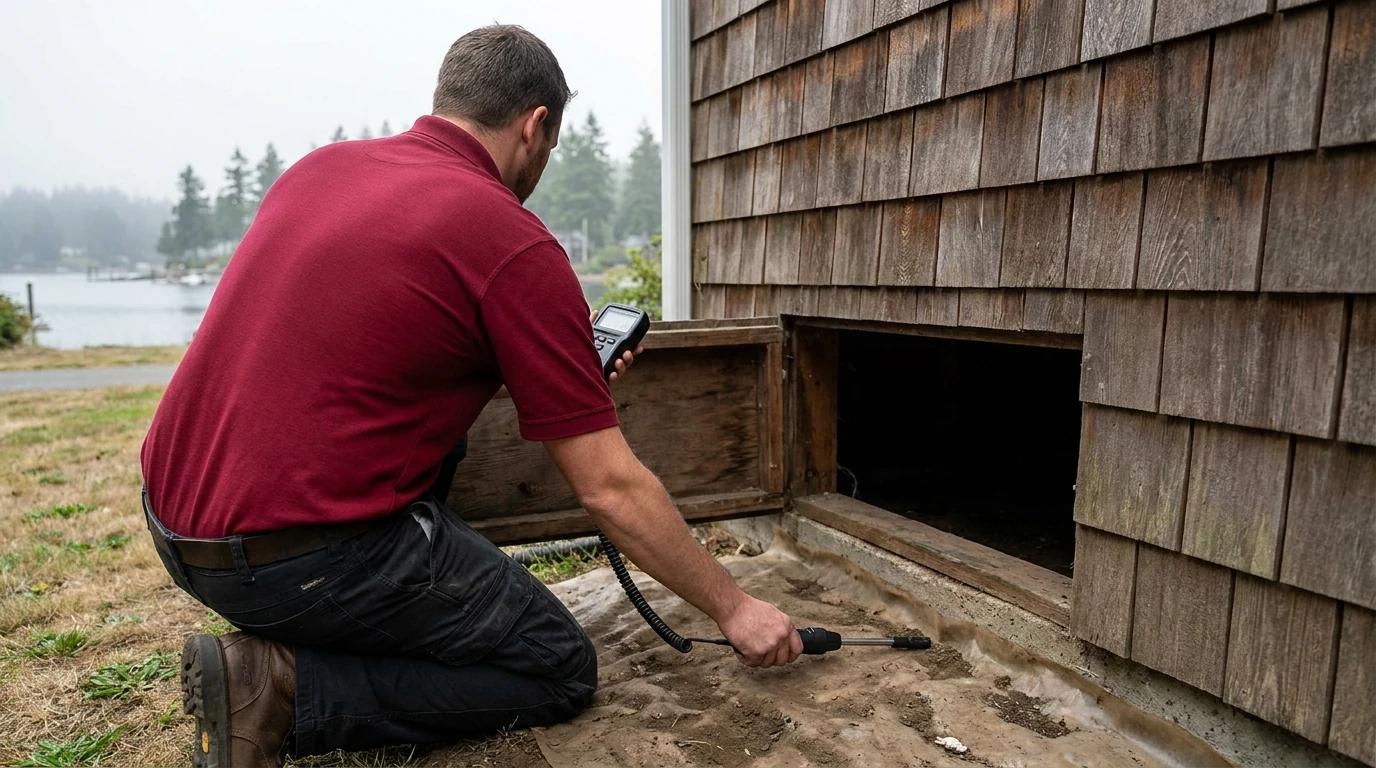
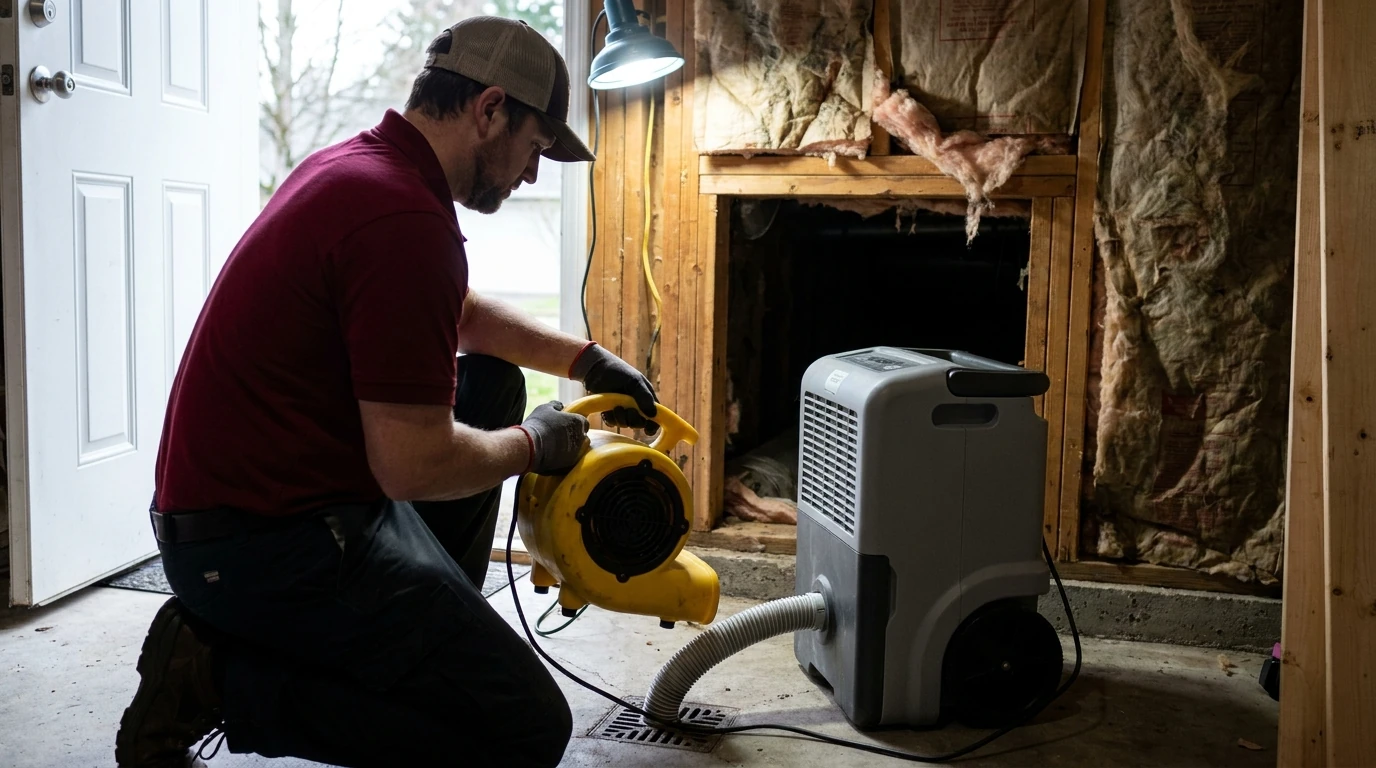
On arrival, a technician checks the water category (clean, gray, or black water, since that determines the cleanup protocol), reads moisture levels in walls, subfloor, and crawl space framing with a moisture meter, and sets up extraction equipment if water is still standing. For the crawl space intrusion that’s common in older Harborview and Finholm District homes, that often means pulling back insulation, extracting pooled water under the vapor barrier, and positioning air movers and a dehumidifier to dry the space over several days, not hours.
You’ll get a written scope before structural drying or any repair work starts. If the flooding damaged finished living space, not just a crawl space, that scope may also flag whether reconstruction is needed once drying is complete, which NARESTCO handles in-house rather than handing off to a separate contractor.
What should I do while I’m waiting for someone to arrive?
Move what you can off the wet floor, and don’t run electrical equipment in standing water. If it’s safe, open crawl space vents and interior doors to start some natural airflow, but don’t attempt to run a shop vac on water that’s near outlets or a panel.
Take photos of the water line on walls, any visibly soaked flooring, and the source if you can identify it (a split hose, a corroded fitting, a window that let in wind-driven rain). These photos become part of the documentation an adjuster will eventually want, and they help the technician understand the timeline when they arrive.
If you’ve dealt with water intrusion in a Gig Harbor crawl space before and it came back, it’s worth asking about a longer-term fix. Our crawl space encapsulation service addresses the vented, ground-moisture-prone crawl spaces that drive repeat flooding in this area rather than just drying it out after the fact.
A flooded house in Gig Harbor is a plumbing problem, a drying problem, and sometimes an insurance problem, all at once. The fastest way through it is one call that covers the mitigation and the documentation together. Call National Restoration Construction at (206) 883-0333 and a technician can walk you through next steps before anyone even arrives.
About National Restoration Construction
National Restoration Construction is an IICRC-certified restoration company founded in 2004, based in Federal Way, WA and serving the South Sound and Kitsap Peninsula, including Gig Harbor. The company holds a General Contractor Certificate of Registration (NATIORC792M6) through the WA State Department of Labor & Industries and is also a Lead-Safe Certified Firm. Its crews handle water damage restoration, flood damage restoration, emergency water removal, crawl space encapsulation, and the full range of fire, mold, and storm restoration services for homes across the region.