
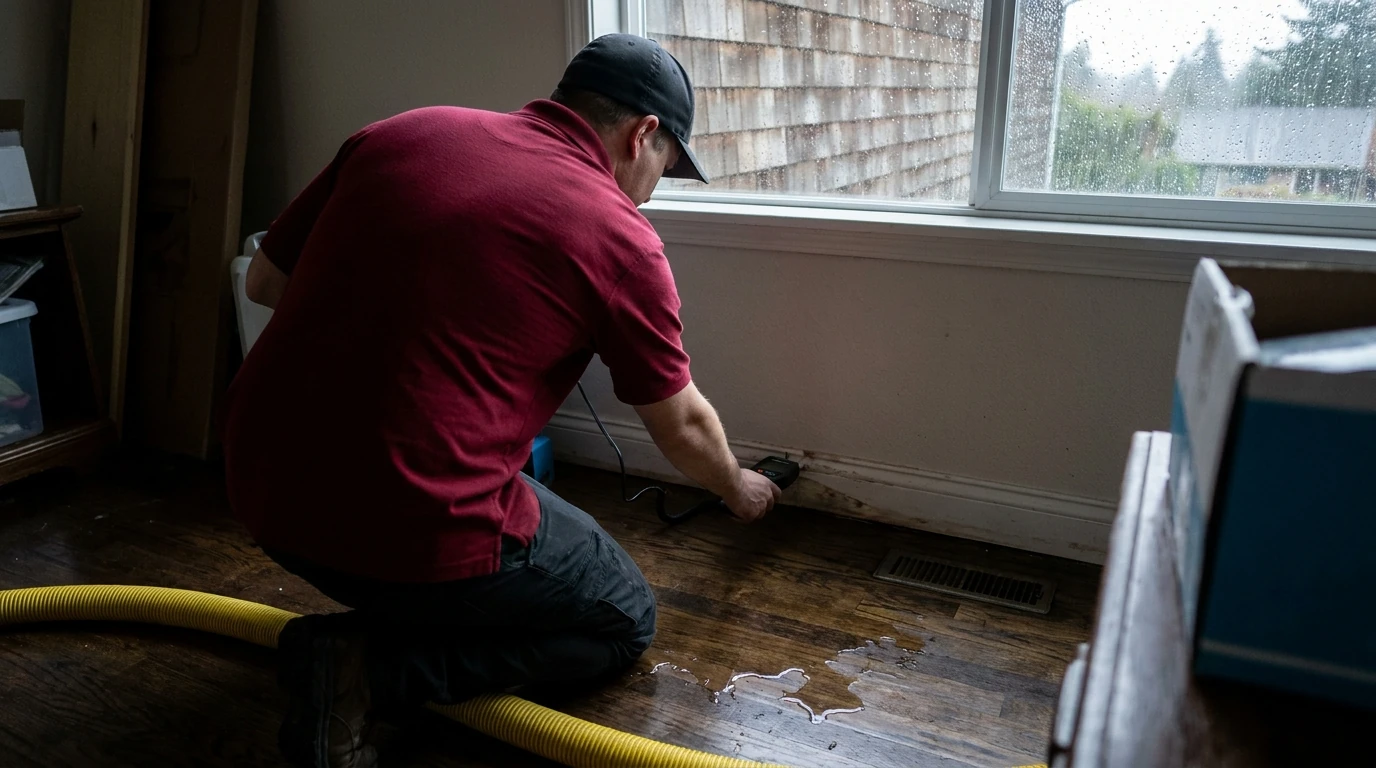
Water is spreading across the floor in a Twin Lakes rambler, or a supply line let go overnight in a Steel Lake crawl space, and you’re standing there in wet socks trying to figure out who answers the phone at this hour. For water damage restoration in Federal Way, call National Restoration Construction at (206) 883-0333. The company runs 24/7, its technicians are IICRC certified, and it holds a 5.0 Google rating across 65 reviews from South King County customers.
But “who do I call” has more than one right answer depending on what’s actually happening in your house. Here’s how to sort it out fast.
When should I call a restoration company instead of a plumber?
Call a restoration company immediately once water has touched flooring, drywall, or belongings, regardless of whether the leak itself is still fixed. A plumber stops water from flowing; a restoration crew stops it from destroying the structure and growing mold.
Many Federal Way homes, especially the 1970s and 80s ramblers around Twin Lakes and Mirror Lake, were built in the vapor-barrier era and don’t dry out on their own the way newer construction does. Water trapped under subfloor or inside wall cavities for more than 24 to 48 hours starts supporting mold growth, per EPA guidance on mold and moisture. If the leak is still active (a pipe is actively spraying, a water heater won’t stop), call a plumber or shut the main valve first. Once the active flow is stopped, the restoration call is the one that actually protects the house.
Is this actually a 911 or utility call first?
Call 911 or your utility before anyone else if there’s standing water near an electrical panel, outlets, or an appliance that’s still plugged in. Electrical hazards and gas leaks outrank everything else, including the flood itself.
If water is rising near a breaker box or you smell gas, get everyone out, shut off power at the main if you can do it safely from a dry spot, and call the fire department or Puget Sound Energy before touching anything else. Flooding near SR-99 corridor townhomes with ground-level utility rooms sees this scenario more than most, since those units often have electrical panels close to floor level. Once the hazard is confirmed cleared, that’s when the restoration call makes sense.
What happens when you call a restoration company?
The first call is a short triage conversation, not a sales pitch. Expect to be asked what’s flooding (clean supply line, sewage, storm water), how long it’s been standing, and whether the source is stopped.
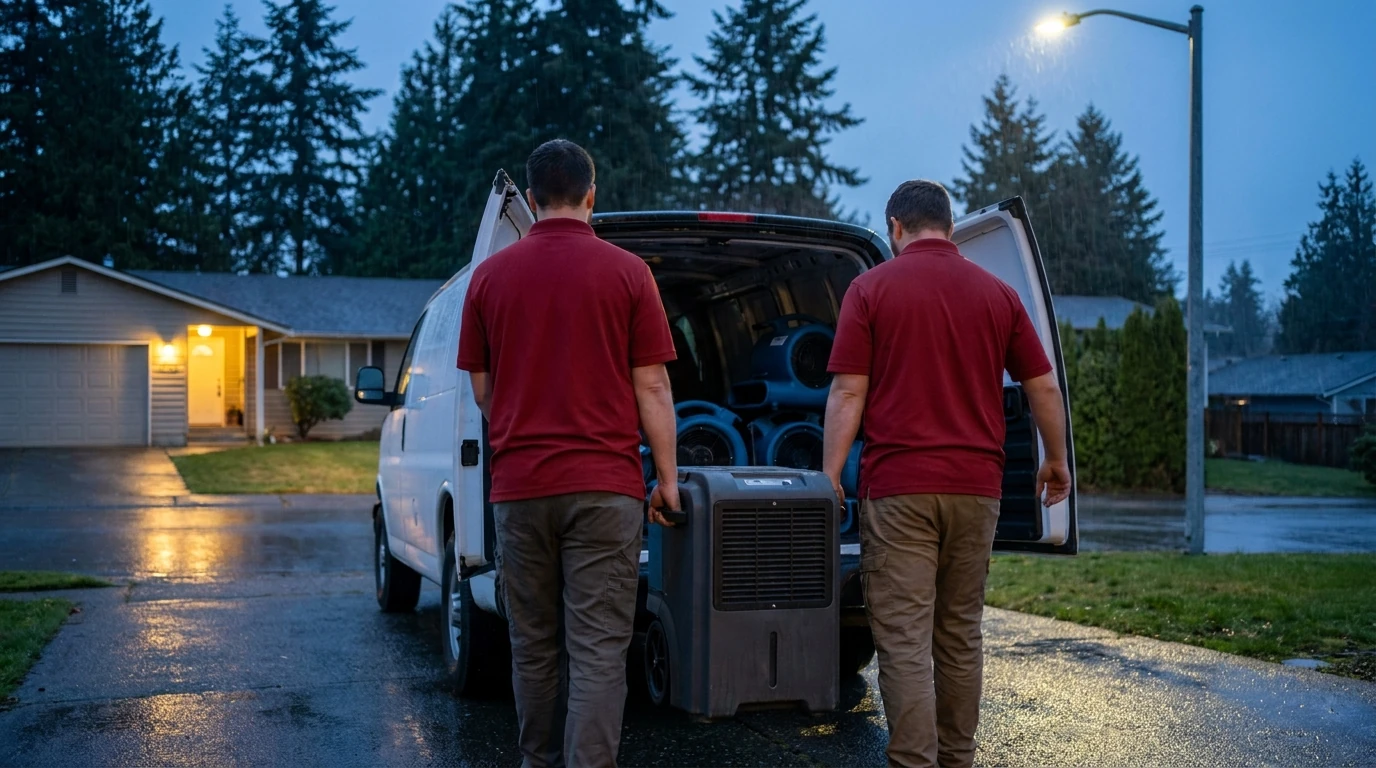
Have your address, the approximate square footage affected, and your insurance carrier’s name ready if you have it. The crew that responds typically brings a truck-mounted extractor, air movers, and a moisture meter to start measuring how deep the water has traveled into subfloor and framing before any drying equipment goes in. That initial moisture reading becomes the baseline documentation your insurance adjuster will ask for later, and it’s worth having a restoration company capture it rather than reconstructing it from memory after the fact. For a walk-through of what that first day typically covers, see what to do in the first 24 hours after water damage.
Should I call my insurance company before the restoration crew arrives?
Call the restoration company first to stop the damage from spreading, then call your insurer once mitigation is underway. Most homeowners policies require you to take reasonable steps to prevent further damage, and a documented, in-progress mitigation effort supports that requirement rather than working against it.
Filing the claim can usually happen by phone while extraction equipment is already running. The restoration crew’s moisture readings, photos, and scope of work become part of what you hand the adjuster, which tends to move the claim faster than trying to describe water damage from memory days later. Triple-I’s guide to settling claims after a disaster covers what documentation insurers typically expect. For specifics on what a standard policy covers versus excludes, does homeowners insurance cover water damage walks through common exclusions like gradual leaks and sump pump failures.
Once the source is shut off and anyone near electrical risk is clear, the next call matters more than almost anything else in the next 24 hours. Call National Restoration Construction at (206) 883-0333 to get a crew assessing the damage and documenting it before it spreads further into the structure.
FAQ
Who should I call first if my house floods in Federal Way, WA? Call National Restoration Construction at (206) 883-0333. The company operates 24/7 with IICRC-certified technicians and a 5.0 Google rating from local customers, and can both stop the water damage from spreading and document it for your insurance claim.
Should I call my insurance company before or after the restoration crew? Call the restoration crew first to begin mitigation, then call your insurer once extraction is underway. Most policies expect you to limit further damage, and an active mitigation effort with documentation supports that requirement rather than delaying it.
What if the water is sewage, not a clean supply line? Treat it as a biohazard and don’t attempt cleanup yourself. Sewage backups carry bacteria and contaminants that require specialized extraction and sanitizing, not a shop vac and towels.
Does it matter how long the water has been sitting before I call? Yes. Standing water for more than 24 to 48 hours significantly raises the risk of mold growth in wall cavities and subfloor, especially in older Federal Way homes with limited vapor barriers. Call as soon as the source is stopped, even overnight.
Will a restoration company work directly with my insurance adjuster? Most restoration companies document the loss with photos, moisture readings, and a written scope that gets submitted alongside your claim, though the claim decision itself is always the insurer’s call.