
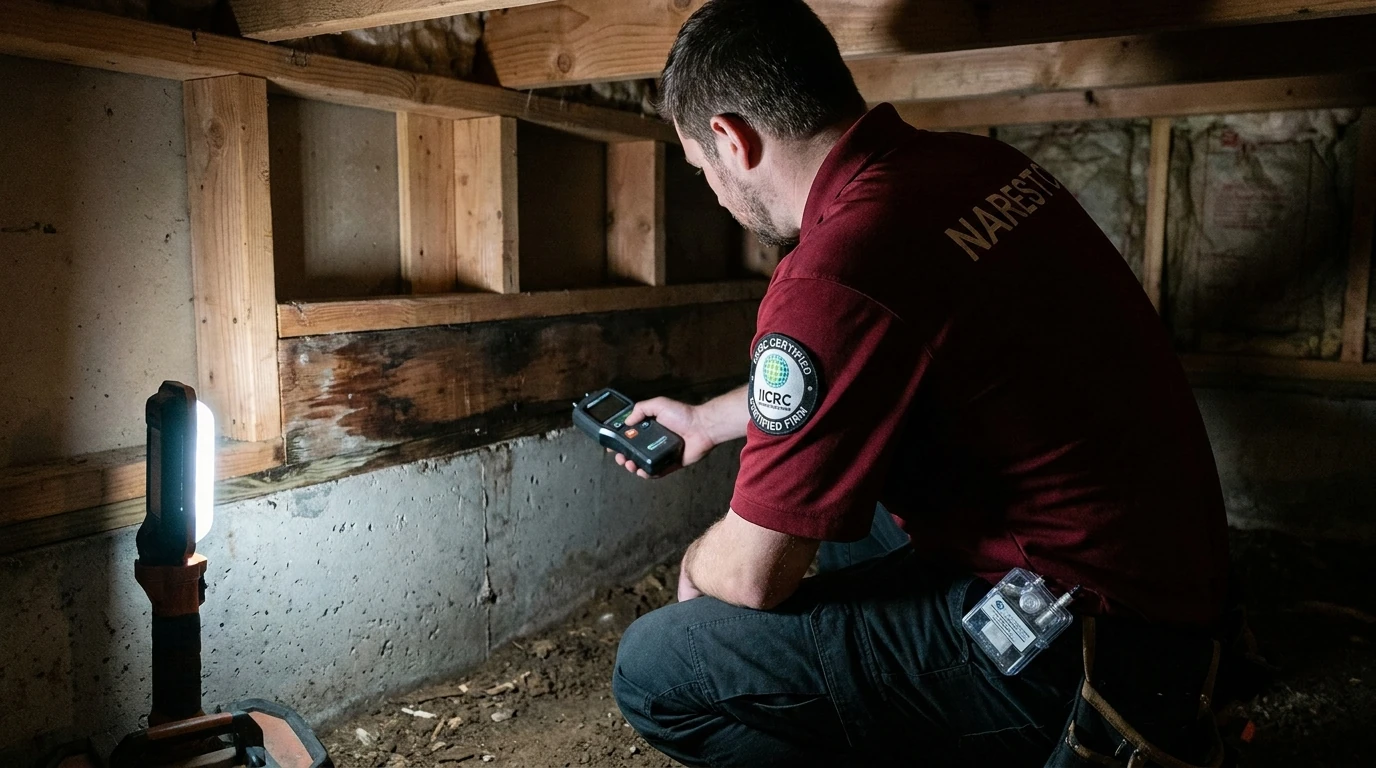
TL;DR: A professional mold inspection in Bellevue, WA typically costs $300 to $700 for a standard single-family home. Air sampling and lab testing add $100–$300 on top of the visual inspection fee. Larger homes, crawl spaces, and HVAC system testing push costs higher. If you’re dealing with a musty smell, a recent water event, or an HOA clearance requirement, a professional inspection is worth the cost, it tells you whether remediation is actually needed and documents the baseline for your insurer.
If you’ve noticed a musty smell in your Somerset townhome, spotted discoloration near a window in your Crossroads condo, or your HOA is requiring post-remediation clearance testing before you can close, you’re looking at a mold inspection. The cost question comes up immediately, and the answer depends on more than just square footage. Here’s what Bellevue homeowners actually pay, what’s included, and how to tell if you need testing on top of the inspection.
How Much Does a Mold Inspection Cost in Bellevue?
A professional mold inspection in Bellevue costs $300 to $700 for most single-family homes, with the average landing around $450 to $500. Condos and smaller units often come in at the lower end ($250–$400). Larger homes over 3,000 square feet, homes with finished basements, or properties with complex crawl spaces routinely run $600–$900 or more.
Those figures cover a visual inspection only, a certified inspector walking the property, documenting moisture readings with a pin-type or non-invasive moisture meter, and identifying areas of visible or suspected growth. Lab testing is separate.
What drives the price up:
- Crawl space access (common in older Bellevue neighborhoods like Lake Hills and Newport Shores)
- Air sampling cassettes sent to an accredited lab: $75–$150 per sample, typically 3–5 samples per inspection
- HVAC duct sampling
- Thermal imaging to find hidden moisture behind walls
- Post-remediation clearance testing (often HOA-mandated in Bellevue condo and townhome developments)
If you’re in a newer development near Bellevue Square or a managed building with an active HOA, budget for clearance testing as a separate line item, it’s often required before the HOA will sign off on completed remediation work.
What’s the Difference Between a Mold Inspection and Mold Testing?
A mold inspection is a visual and instrument-based assessment; mold testing is the lab analysis of samples collected during that inspection. You can have an inspection without testing, but you can’t meaningfully test without an inspection first.
During a visual inspection, a certified inspector:
- Walks the entire property looking for visible growth, staining, and moisture damage
- Uses a moisture meter to identify elevated readings in walls, floors, and ceilings
- Documents areas of concern with photos
- Identifies likely moisture sources (roof leaks, plumbing failures, condensation)
Mold testing adds sample collection and lab analysis:
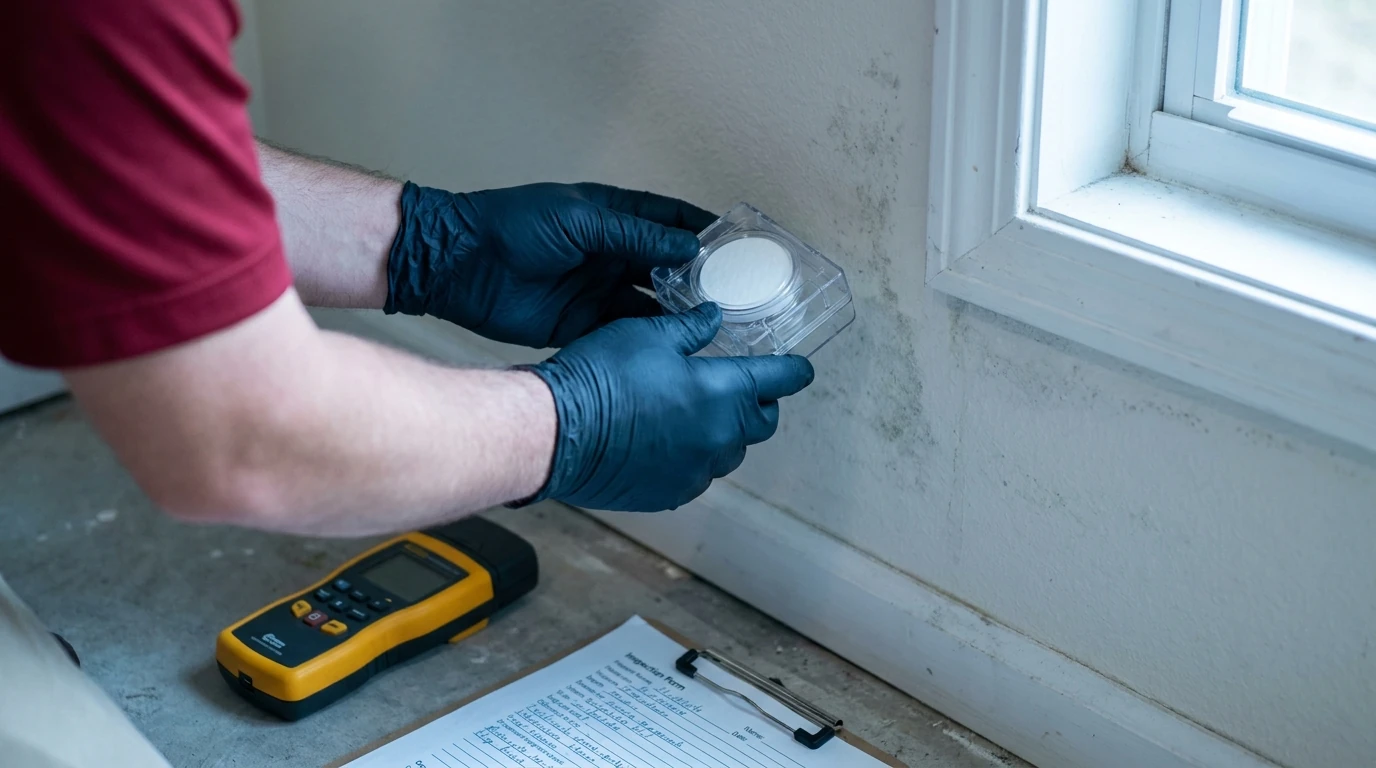
- Air sampling: A pump draws air through a cassette for a set time period. The cassette goes to an accredited lab, which counts and identifies spore types. Results typically take 24–72 hours.
- Surface sampling (swab or tape lift): Used when visible growth is present and you need to confirm the species. Relevant if there’s a question about whether growth is Stachybotrys (commonly called black mold) versus more common species like Cladosporium or Penicillium. Our post on black mold vs regular mold explains the practical differences.
- Bulk sampling: A physical piece of material (drywall, insulation) sent to the lab. Less common in residential inspections.
For most Bellevue homeowners, air sampling at 3–5 locations (one outdoor baseline, two to four indoor) gives a defensible picture of what’s in the air and whether indoor counts are elevated relative to outside. The EPA’s guidance on mold notes there are no federal standards for acceptable indoor mold counts, which is exactly why the outdoor baseline comparison matters.
If you want a deeper look at DIY test kits versus professional testing, our guide on how to test for mold in your home covers the tradeoffs honestly.
Is a Mold Inspection Worth It?
For most Bellevue homeowners with a specific concern, a musty smell, a past water event, or visible staining, a professional inspection is worth the cost. The inspection either confirms a problem (and gives you a documented scope to work from) or rules one out (and saves you from unnecessary remediation).
Skipping the inspection and going straight to remediation is a common mistake. Without a baseline air sample, you have no way to verify the remediation actually worked. Without a written inspection report, your insurer has no documentation to support a claim.
When a mold inspection is clearly worth it:
- You had water damage and it wasn’t dried within 48–72 hours. Mold can begin colonizing porous materials in that window, as we explain in our post on how quickly mold grows after water damage.
- You’re buying or selling a home in Bellevue and want a clean bill of health (or need to disclose)
- Your HOA requires post-remediation clearance testing
- You smell mold but can’t find visible growth
- A family member has unexplained respiratory symptoms
- You had a roof leak, appliance failure, or plumbing leak in the past year
When you might not need a full inspection:
- You can see obvious growth on a small area (under 10 square feet) after a known, contained water event, in that case, you may be able to go straight to remediation
- You’re doing routine seasonal maintenance with no specific concern
What Does the Mold Inspection Process Look Like?
A professional mold inspection typically takes 1.5 to 3 hours for a standard Bellevue home. Here’s what to expect:
- Pre-inspection interview: The inspector asks about water history, HVAC system age, any prior repairs, and where you’ve noticed symptoms or odors.
- Exterior walkthrough: Checking roof condition, gutters, grading, and any visible exterior moisture intrusion points, relevant in Bellevue’s higher-elevation neighborhoods like Somerset, where ice-dam roof issues can drive interior moisture.
- Interior visual inspection: Every room, including closets, under sinks, around windows, and in mechanical spaces. Moisture meter readings taken at suspect areas.
- Crawl space or attic inspection: If accessible, these are often where growth is found first. Crawl spaces under older Lake Hills and Newport Shores homes are a common site.
- Air sampling: If included, pumps are set up in agreed locations and run for a timed cycle. An outdoor sample is always collected as a control.
- Documentation: The inspector photographs findings and notes moisture readings. You receive a written report, typically within 24–48 hours of lab results.
The IICRC S520 standard governs professional mold remediation, and a qualified inspector will assess conditions against that framework, which matters when you’re presenting findings to an insurer or an HOA board.
What Happens If the Inspection Finds Mold?
If the inspection confirms active growth or significantly elevated spore counts, the next step is a written remediation scope, not an immediate work order. A reputable firm will give you a documented plan before any work begins, so you know exactly what’s being removed, what containment protocols apply, and what the post-remediation clearance criteria are.
Mold remediation costs in the greater Seattle and Eastside market vary widely based on affected area, materials involved, and containment requirements. For a detailed breakdown of what remediation typically costs in this region, see our mold remediation cost guide for Seattle.
If the mold resulted from a covered water loss, a burst pipe, appliance failure, or roof leak, your homeowners insurance may cover remediation. It will not cover the inspection itself in most cases, but a documented inspection report is often required to support the remediation claim. Our post on what homeowners insurance covers and doesn’t cover walks through how mold fits into a typical policy.
National Restoration Construction provides mold inspection and testing services across Bellevue and the Eastside, with IICRC-certified technicians and written scopes before any remediation work begins. To schedule a moisture assessment or mold inspection for your Bellevue property, call (206) 883-0333.
About National Restoration Construction
National Restoration Construction is an IICRC-certified restoration company serving Bellevue, Federal Way, Seattle, and surrounding Puget Sound communities since 2004 (WA License NATIORC792M6). The company holds EPA certification, Lead-Safe Firm certification, and ANSI certification, and is BBB Accredited. Their crews handle water damage, mold inspection and remediation, fire and smoke damage, and full reconstruction across the Eastside and South King County.
Video Transcript
Noticing a musty smell or visible staining in your Bellevue home? You might need a mold inspection, and the cost is more predictable than you think. Most single-family homes in Bellevue run between three hundred and seven hundred dollars for a professional mold inspection, with the average around four fifty. Condos and smaller units often come in lower. Larger homes, finished basements, or tricky crawl spaces can push costs above nine hundred dollars. A visual inspection covers moisture readings, documented photos, and identifying likely sources like roof leaks or plumbing failures. Air sampling and lab testing are separate, typically one hundred to three hundred dollars more. A pump collects air into a cassette sent to an accredited lab. Three to five samples, one outdoor baseline plus indoor locations, gives a clear picture of whether mold levels inside are elevated. Skipping straight to cleanup without a baseline sample is a common mistake. Without documentation, you can’t prove the remediation actually worked. Had water damage not dried within forty-eight hours? Buying or selling? HOA requiring clearance testing? Those are all clear signs an inspection is worth it. Read the full Bellevue mold inspection cost guide at narestco.com. Then call National Restoration Construction at two oh six, eight eight three, oh three three three for a free estimate.