
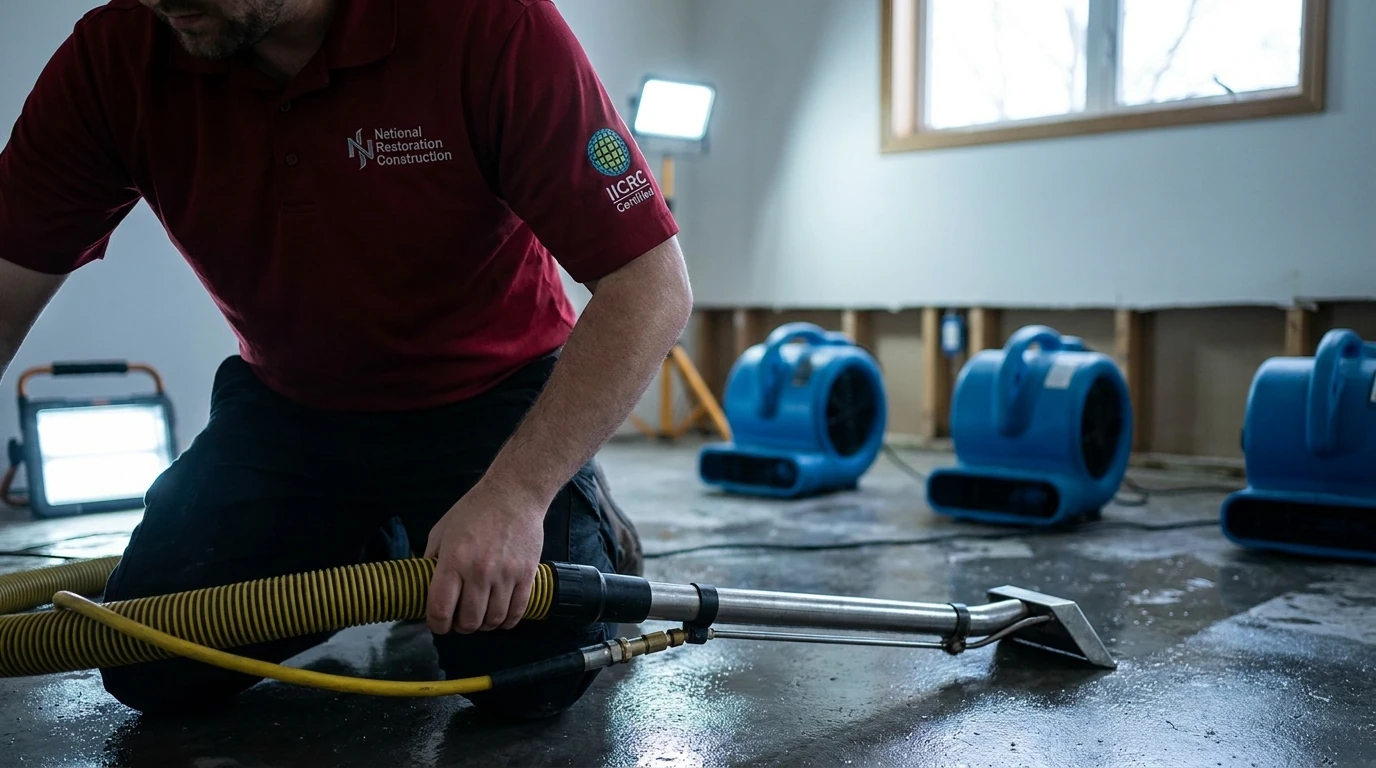
When water shows up where it shouldn’t, on a floor, inside walls, under equipment, the person who finds it isn’t thinking about reviews or credentials. They’re thinking about how fast someone can get there and whether the crew that shows up actually knows what they’re doing. One of our customers, Benjamin, left a review after exactly that kind of day. It’s worth unpacking, because the details he picked out, response time, hard work, easy communication, are the same three things that separate a job that goes smoothly from one that doesn’t.
Had a water emergency on site. These guys showed up the next day and started taking care of business! took a few days to get all the water out/ damage ripped out. Those guys worked hard! Communication with the guys in the office was easy and fast. Overall, very happy. Would recommend.
, Benjamin, verified Google review
What “Showed Up the Next Day” Actually Means for a Water Emergency
A next-day arrival on a water emergency usually means a crew took the call, assessed the scope over the phone, and scheduled the right equipment and the right number of technicians instead of just sending whoever was closest. Water calls get triaged: active flooding and electrical hazards jump the queue, while water that’s already been shut off or contained can be scheduled with a short lead time without getting worse.
That triage call also sets up everything after it. The office needs to know roughly how much square footage is affected, whether the water source has been stopped, and what’s on the floor (carpet, hardwood, concrete) before the truck even leaves. Getting that right the first time is why the crew can walk in and start working instead of spending the first hour figuring out a plan.
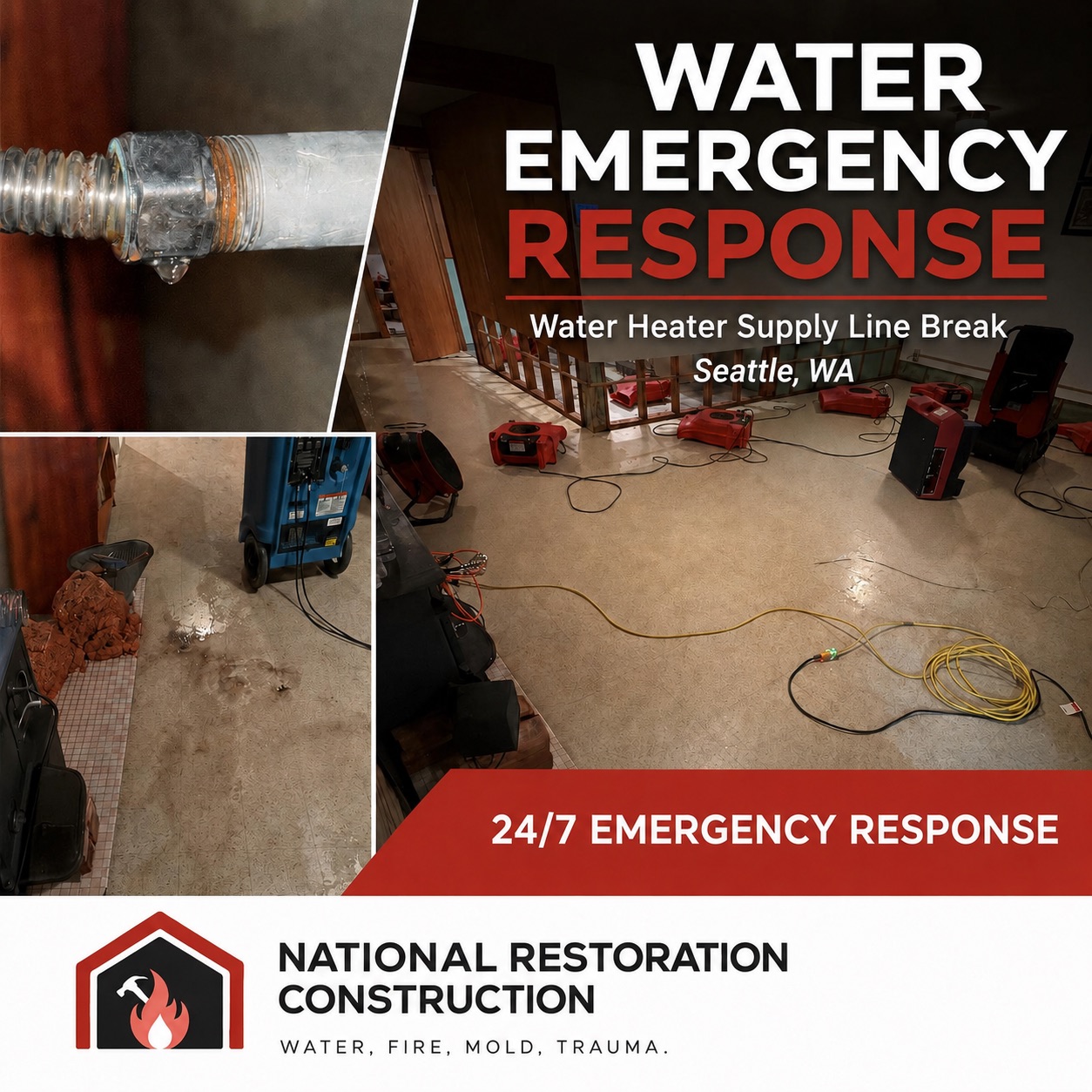
Recent job photo from National Restoration Construction.
Why “Taking the Water Out” Takes a Few Days, Not a Few Hours
Extraction itself, pulling standing water with truck-mounted or portable units, is usually the fastest part of the job. The days come from what happens after: drying the structure down to a safe moisture level and removing anything that got wet enough to hold onto it.
Under the IICRC S500 standard, that means setting air movers and dehumidifiers, then checking moisture readings daily until wall cavities, subfloor, and framing all read dry, not just the surface. Materials that stayed wet too long, drywall, insulation, baseboard, flooring, usually have to come out rather than just dry in place, because they’ll hold moisture and eventually mold no matter how many fans are running. That’s the “damage ripped out” part Benjamin mentioned: it’s not demolition for its own sake, it’s removing the materials that would otherwise cause a second, slower problem.
A single room with clean water might dry in two to three days. A larger area, or water that sat for a while before anyone found it, takes longer and usually means more tear-out. Our water damage restoration and emergency water removal teams scope that out up front so there are no surprises mid-job.
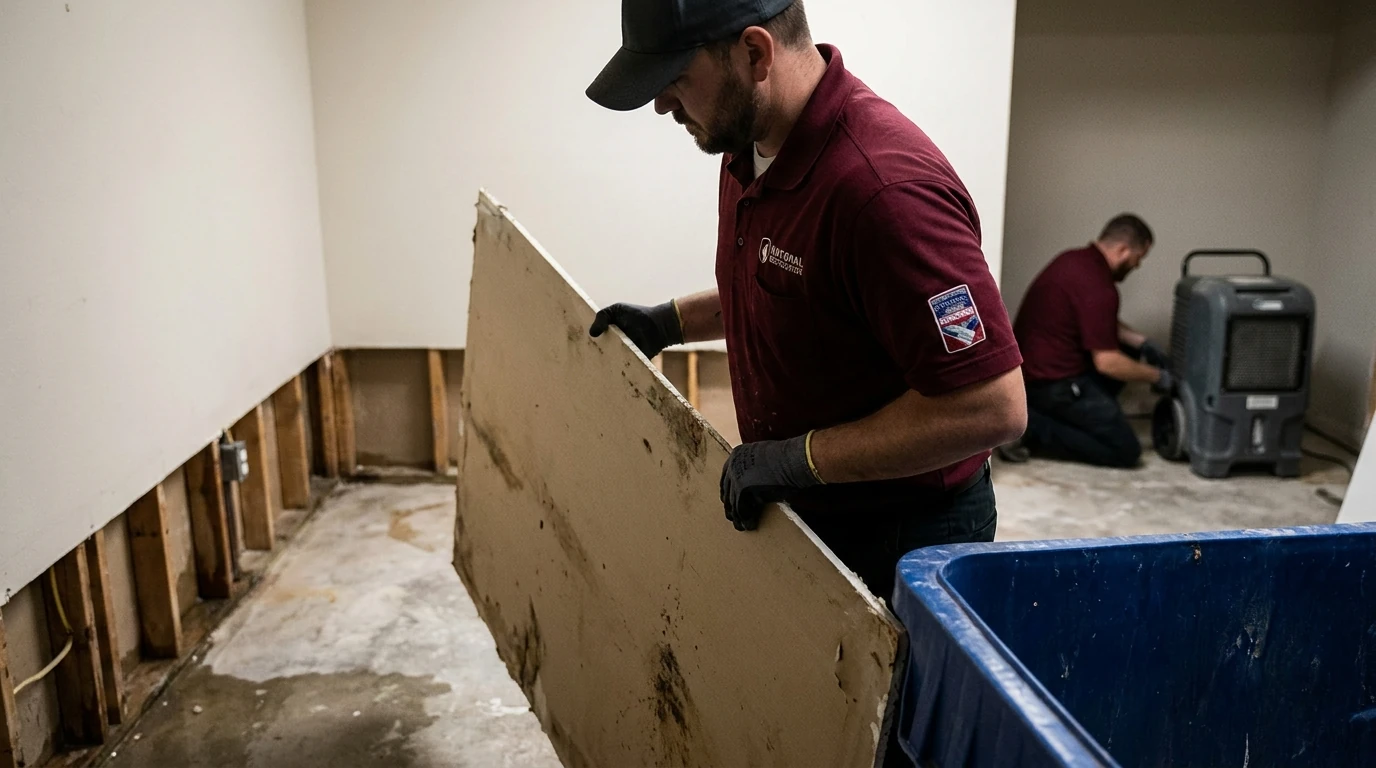
What “Those Guys Worked Hard” Looks Like on a Demo Day
Water mitigation is physical, repetitive labor: hauling wet carpet pad, cutting and removing drywall along a moisture line, moving furniture and equipment out of the way, running hose lines, and resetting air movers every time a section finishes drying. It’s not glamorous work, and on a multi-day job the crew is doing it on day one and day three the same way.
The pace matters because every day water sits, or every day drywall stays wet, is a day closer to secondary damage. A crew that works at a steady, thorough pace through a multi-day job is usually the difference between a clean dry-out and a callback for mold six weeks later.
Why Office Communication Matters as Much as the Crew Onsite
Fast, easy communication with the office is what keeps a multi-day job from feeling like a black box. Someone on site wants to know what’s happening today, what’s left, and how the job connects to their insurance claim, without having to chase the crew down to get an answer.
On a job with an insurance component, that office communication usually includes documenting moisture readings, photos, and scope of work in a form the adjuster can review. Getting that paperwork right while the work is happening, instead of reconstructing it afterward, is often what keeps a claim moving instead of stalling. If you want the background on how that documentation plays into a claim, our post on what to do in the first 24 hours after water damage walks through it in more detail.
If you’re dealing with standing water or a soaked structure right now, the sequence is the same one Benjamin described: get someone on the phone, get the water out, and get daily updates until the structure reads dry. Call National Restoration Construction at (206) 883-0333 to get a crew scoped and scheduled.
About National Restoration Construction
This case study was put together with input from the National Restoration Construction team by Jose Osuna. National Restoration Construction is an IICRC-certified, EPA-certified restoration and general contracting company based in Federal Way, WA, operating since 2004 under WA L&I Certificate of Registration NATIORC792M6. The company holds a 5.0 Google rating across 64 reviews and answers calls 24/7.